
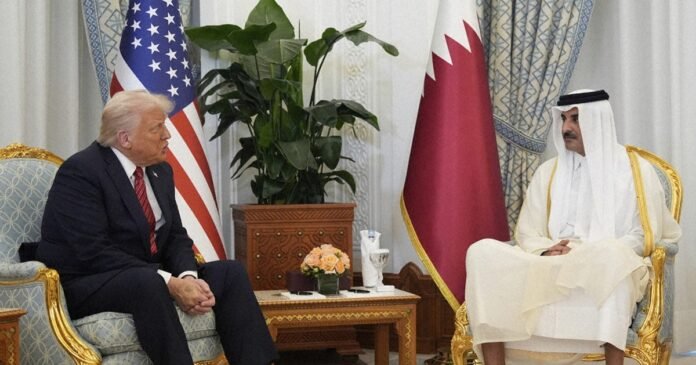
Qatar stepped up diplomacy to reduce tensions across the Middle East. Leaders in Doha worked quickly to prevent further risks. At the same time, Washington and Tehran weighed talks and threats. Therefore, Qatar moved early to protect regional stability.
Sheikh Tamim held a direct phone call with US President Donald Trump. He stressed the need for dialogue and steady coordination. Moreover, he encouraged stronger political and security co-operation. Both leaders agreed that communication must guide every decision.
During the call, they reviewed fast-changing developments across the region. They discussed Iran’s nuclear programme and rising military pressure. In addition, they examined ways to lower risks through talks. As a result, both sides supported diplomatic solutions over confrontation.
Meanwhile, Israeli Prime Minister Benjamin Netanyahu prepared for meetings in Washington. He planned to widen the agenda beyond nuclear limits. He wanted curbs on Iran’s missile systems and regional activities. Therefore, he aimed to push for stricter security conditions.
At the same time, Iranian officials expanded their own outreach. Senior adviser Ali Larijani traveled to Doha and met Sheikh Tamim. He also spoke with other Gulf leaders to strengthen ties. Through these visits, Iran sought dialogue and broader understanding.
However, military concerns continued to rise across the region. The United States increased its naval presence near Iran. It deployed more assets to show readiness and deterrence. Consequently, many observers feared that missteps could trigger confrontation.
Trump outlined firm expectations for any future agreement. He demanded limits on nuclear weapons and missile capabilities. However, he shared a few details about the path forward. Still, his remarks signaled pressure on Tehran to accept tougher terms.
In contrast, Qatar maintained a balanced and steady approach. The country promoted talks instead of threats or force. It built bridges between rivals and encouraged compromise. Because of this strategy, many governments trusted Doha’s mediation.
Furthermore, Qatar reviewed its strategic partnership with Washington. Leaders explored deeper co-operation in security and trade. They also discussed ways to support development in several sectors. These steps are aimed at protecting regional stability over the long term.
Even so, uncertainty remained high in diplomatic circles. Talks between the US and Iran showed cautious progress. However, no side offered firm guarantees or timelines. Therefore, markets and governments watched every move closely.
Despite the risks, Qatar refused to slow its efforts. Officials kept communication channels open with all sides. They urged restraint and patience during sensitive negotiations. Once again, they highlighted regional stability as the shared objective.
Going forward, Doha plans to expand mediation and dialogue. Leaders want practical solutions and lasting agreements. They believe trust can grow through steady engagement. Ultimately, Qatar sees diplomacy as the safest path to peace.
