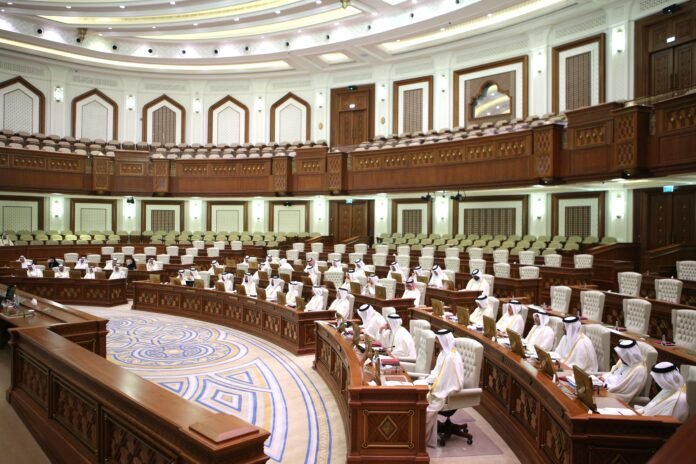
Oman’s Shura Council convened today to discuss the Draft State General Budget for 2026 and the Eleventh Five-Year Development Plan (2026–2030), emphasizing economic diversification and sustainable growth. The session marked a crucial step in aligning fiscal policies with Oman Vision 2040 and long-term development goals.
The Council heard statements from the Minister of Finance and the Minister of Economy. They highlighted recent achievements in Oman’s economy, including improved financial stability, reduced public debt, and increased investor confidence. Both ministers stressed that economic diversification and sustainable growth remain central priorities in shaping fiscal and development strategies.
The 2026 budget covers public revenues, government spending, debt management, projected oil prices, and social protection programs. It also outlines investments in education, healthcare, housing, and sectors that stimulate economic growth. The budget aims to support citizens while encouraging private sector development and new business opportunities.
The Eleventh Five-Year Development Plan focuses on a sustainable economy through renewable energy projects, low-carbon initiatives, and green hydrogen investment. The plan promotes regional economic decentralization, employment efficiency, social development, and stronger governance. Its design followed a detailed evaluation of the Tenth Plan, sectoral growth, and improvements in infrastructure, legislation, and investment frameworks.
Council members actively participated in the discussion, raising questions on financial assumptions, oil price fluctuations, global economic impacts, and project priorities. They emphasized expanding social protection, creating jobs, and empowering Omanis through training programs. Members also stressed the importance of growth in manufacturing, tourism, digital economy, and natural resource sectors.
The Economic and Financial Committee reviewed the draft budget thoroughly. Their report included recommendations supporting national priorities, aligned with the Eleventh Five-Year Plan and Oman Vision 2040. Council members also received updates on draft legislation, including the Unified Law for International Land Transport among GCC states and amendments to the Personal Data Protection Law.
The Shura Council will continue discussions tomorrow, focusing on approving the Draft Law on Sports Entities. These efforts highlight Oman’s commitment to economic diversification and sustainable growth, ensuring resilience amid global economic challenges.