
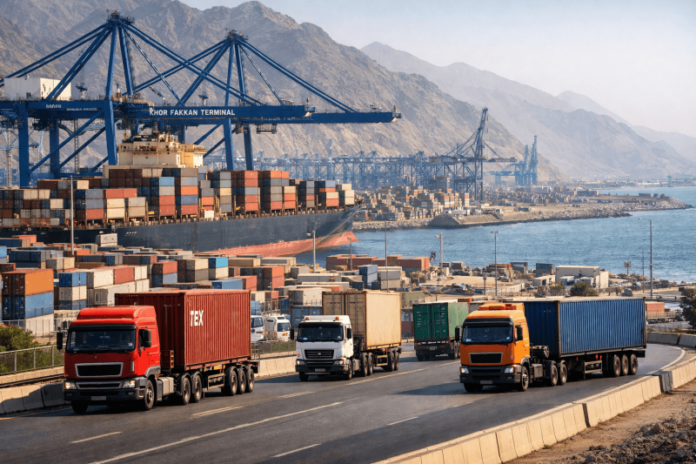
Oman is enhancing its position as a regional logistics hub by introducing new measures to facilitate transit goods. The Royal Oman Police, through the General Directorate of Customs, outlined steps aimed at making the entry and movement of transit goods faster and more efficient. These reforms are expected to reduce administrative delays and improve operational flow across the Sultanate.
Among the measures, empty containers can now move in and out of Oman without customs declarations. Instead, inspections will rely on security scanning devices. Authorities say this will significantly speed up port and border handling procedures.
For shipments in transit, customs declarations will be processed electronically from the point of entry to the port. This system uses a unified booking number, allowing clearance to apply only to physically arrived goods. The approach ensures smoother operations while minimizing paperwork for traders.
Additionally, vehicles and equipment arriving from Gulf Cooperation Council (GCC) countries no longer need a customs card or export certificate. Traders need only submit a transit declaration for passage. Customs officials emphasize that this simplification supports businesses and strengthens Oman’s regional trade role.
The General Directorate of Customs confirmed that these initiatives align with Oman’s strategy to boost efficiency while maintaining regulatory and security standards. Officials added that streamlining transit goods management will attract more regional shipments and encourage trade growth.
Experts note that these changes reflect the Sultanate’s commitment to both economic competitiveness and logistics modernization. With faster processing, reduced paperwork, and improved digital tracking, traders can expect smoother operations at ports and borders.
In recent years, Oman has invested heavily in port infrastructure, digital systems, and regulatory frameworks. These investments complement the new facilitation measures, ensuring that the country remains a reliable corridor for goods moving through the Gulf region.
As Oman continues implementing these reforms, businesses can anticipate shorter delays, lower operational costs, and more predictable delivery schedules. By focusing on the movement of transit goods, the Sultanate is signaling its intent to become a central logistics hub for the GCC.
