
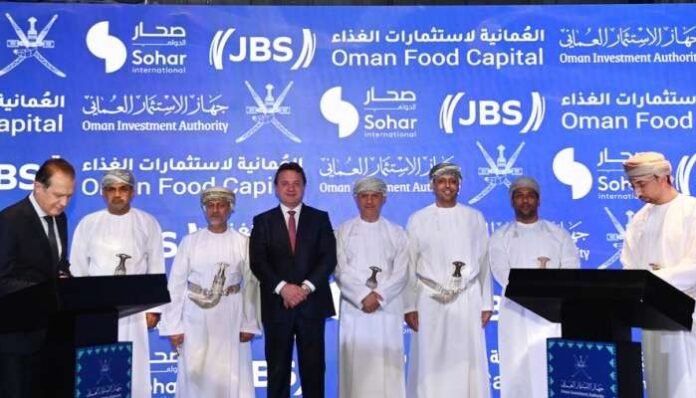
Oman Food Investment Company has signed a strategic partnership with Brazil’s JBS to expand meat and poultry production. Moreover, the collaboration supports Oman’s plan to become a regional hub for halal food. The partnership highlights innovation, international cooperation, and sustainable food production in the Sultanate.
The agreement includes new facilities for beef, sheep, and poultry. Al Namah Poultry Company in Ibri will operate an expanded integrated poultry plant. Meanwhile, Al Bashayer Meat Company in Thumrait will increase its slaughtering and processing operations. As a result, the Sultanate will reach an annual production capacity of about 300,000 tonnes.
Specifically, the project will produce around 77,000 tonnes of beef, 20,000 tonnes of sheep meat, and 208,000 tonnes of poultry. This growth strengthens food security and positions Oman as a key halal protein exporter.
Oman Food Investment Company expects to create over 3,000 direct jobs across production, processing, and logistics. This initiative also supports workforce skill development, economic diversification, and sustainable growth in agriculture and food industries.
The partnership leverages JBS’s global distribution network, spanning 26 countries and delivering products to about 180 countries worldwide. Consequently, Oman Food Investment Company ensures its facilities exceed local demand, opening doors for regional and international markets.
The collaboration reflects Oman Food Investment Company’s commitment to Vision 2040. It focuses on sustainable, high-impact investments that enhance Oman’s food sector. Additionally, it demonstrates international confidence in Oman’s investment environment and its readiness to serve as a regional platform for advanced food value chains.
JBS’s presence in Oman marks its first entry into Middle Eastern supply chains. The company employs over 282,000 people globally and invests in logistics, waste management, biodiesel, and fertilizers.
Ultimately, Oman Food Investment Company is transforming the country from a net protein importer into a leading exporter. The partnership strengthens food security, boosts the economy, and creates jobs. It sets a benchmark for innovation, collaboration, and sustainable food production in the region.
