
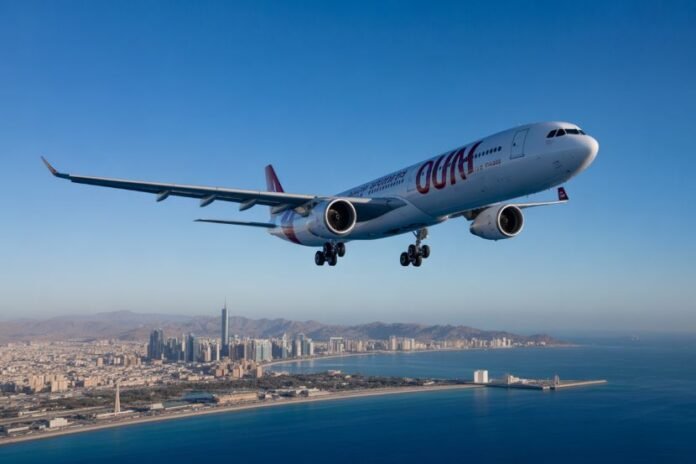
Oman is accelerating its international tourism strategy, emphasizing accessibility, sustainability, and unique cultural experiences. The launch of direct Beijing–Muscat flights and simplified visa measures is expected to attract more global visitors. These steps reflect Oman’s broader goal: sustainable tourism growth.
The direct route from Beijing to Muscat marks the first time a major Chinese airline operates nonstop flights to the Sultanate. This connection shortens travel time and removes the need for stopovers, making Oman more appealing to Chinese tourists. The airline currently operates two weekly flights, with plans to increase frequency as demand rises. By scaling gradually, Oman ensures the route develops sustainably while maintaining service stability.
Tourism experts note that Chinese travellers are seeking destinations offering authenticity, natural beauty, and cultural depth. Oman provides exactly this, from scenic mountains and deserts to historic coastlines and ancient villages. Visitors can enjoy immersive experiences such as traditional markets, coastal retreats, and guided cultural tours. These offerings highlight Oman’s commitment to sustainable tourism growth and showcase its unique identity.
Alongside better air access, Oman introduced visa exemptions for ordinary passport holders from China. Travellers may enter Oman without a visa for up to 30 days for tourism, business, or family visits until the end of 2026. This policy encourages two-way tourism, strengthens people-to-people connections, and fosters cultural and economic collaboration.
Industry stakeholders emphasize that this initiative is part of Oman’s strategic approach to diversify its visitor base. Coordinated efforts among tourism, aviation, and government sectors ensured smooth planning and execution. The Beijing–Muscat route also enables tour operators to design specialized itineraries highlighting desert adventures, marine exploration, wellness retreats, and cultural experiences.
Moreover, direct flights are expected to boost trade, business travel, and investment between Oman and China. Easier travel and faster connections allow companies to explore partnerships, knowledge exchange, and economic collaboration more effectively.
Looking ahead, Oman’s tourism outlook is strong. Expanded connectivity, simplified visas, and rising international demand create favorable conditions for sustainable tourism growth. By providing serene, culturally rich experiences, Oman positions itself as a preferred destination for Chinese and international travellers.
Overall, sustainable tourism growth remains the key phrase that drives Oman’s strategy. While focusing on accessibility, authentic experiences, and careful planning, Oman continues to advance sustainable tourism growth, creating long-term benefits for visitors and the local economy alike.
