
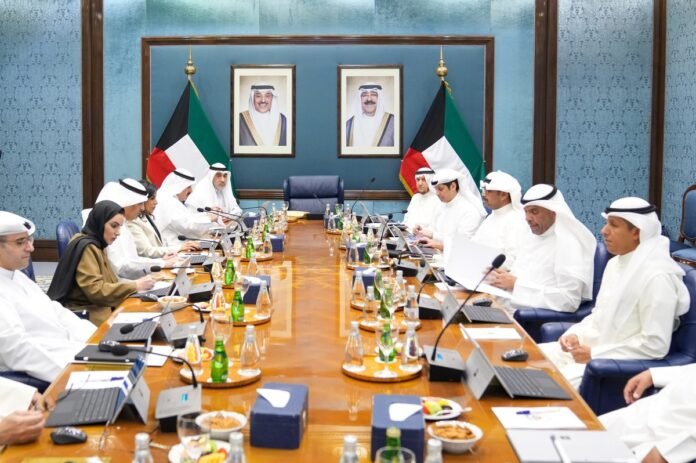
Kuwait is preparing to launch Kuwait’s largest legislative reform in history. Minister of Justice Nasser Al-Sumait announced the ambitious plan during an inspection tour of the Al-Raqqai Courts Complex. The government will collaborate with state agencies and civil society institutions to implement sweeping changes.
Al-Sumait highlighted that Kuwait has experienced two major legal transformations before. The first occurred between 1959 and 1965, introducing key laws like the Nationality Law. The second phase, from 1978 to 1984, established the Civil Code and Personal Status Law. Now, Kuwait’s largest legislative reform will bring even more significant updates.
Currently, eight working committees are examining critical legislation. These include the Economic Courts Law, Rent System Law, and Labor Law. Additionally, the Penal Code and Criminal Procedures Law are under review. The reform also emphasizes alternative dispute resolution methods like mediation and arbitration.
The plan will leverage digital technology to improve efficiency and accessibility. Al-Sumait confirmed that the new Judicial Law is in its final stages. Once approved, it will pave the way for a complete judicial overhaul. This aligns with His Highness the Amir Sheikh Meshal Al-Ahmad Al-Jaber Al-Sabah’s vision for progress.
Kuwait currently has 983 active laws. Al-Sumait pledged to review 10% within a year but surpassed that goal. His team assessed 118 laws in just eight months. Now, they are examining another 15%, aiming for 25% within the first year. Judges, prosecutors, and legal experts have played a crucial role in this effort.
Kuwait boasts one of the highest judge ratios globally—33 per 100,000 people. In comparison, the US has only five, while China and the EU have eleven. Despite this, the system faces delays due to outdated procedures. The reform will modernize processes like power of attorney documentation.
The Kuwait Institute for Judicial and Legal Studies is developing an electronic testing system. This will assess junior legal researchers, who may later become prosecutors. Tests will be auto-graded, followed by interviews under judicial supervision. This ensures fairness and transparency in appointments.
Currently, 77% of judges are Kuwaiti, with plans to reach 80% by October 2025. The target rises to 85% in 2026 and 90% by 2027. Full Kuwaitization is expected by October 1, 2030. Al-Sumait thanked foreign judges, especially from Egypt, but stressed that nationalizing the judiciary remains a top priority.
With Kuwait’s largest legislative reform, the country is entering a new era of judicial efficiency. Digital advancements, updated laws, and Kuwaitization will ensure a faster, fairer legal system. The changes promise to strengthen Kuwait’s position as a leader in judicial innovation.
