
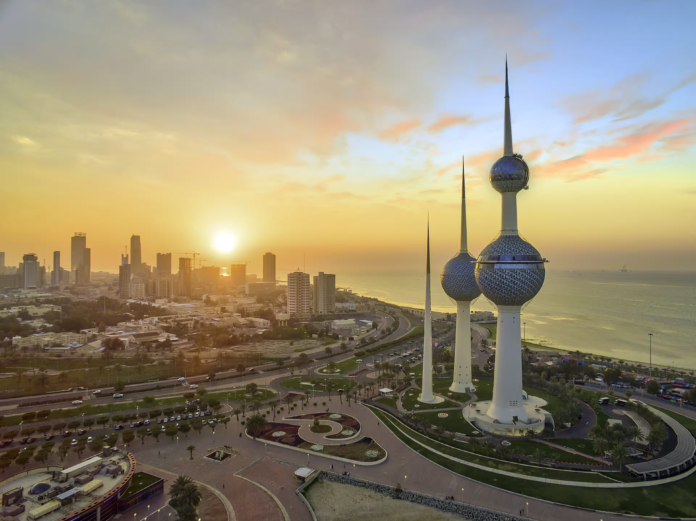
Kuwait Towers stands as a timeless symbol of national pride, representing cultural heritage and architectural innovation. This iconic landmark shows how Kuwait Towers blend tradition and modernity while serving practical functions and attracting international visitors. Moreover, the towers reflect Kuwait’s commitment to preserving national identity and promoting tourism.
Originally conceived in 1963 as a water storage project, the towers evolved into a symbol of Kuwait’s progress and cultural pride. The tallest tower rises 187 meters, storing one million cubic gallons of water. The second tower, 147 meters high, also stores water. Meanwhile, the third tower, at 113 meters, provides electricity and illuminates the complex with 100 floodlights.
The architectural design incorporates traditional Kuwaiti elements. The main tower resembles an incense burner (mabkhara), the second tower mirrors a sprinkler (marash), and the smallest tower evokes a kohl container (mekhala). This blend of cultural symbolism with modern engineering has earned the towers global recognition. In fact, the Kuwait Towers received the Aga Khan Award for Islamic Architecture in 1980.
During the Iraqi invasion of 1990, the towers sustained significant damage. Extensive restoration was completed by December 1992, ensuring the towers remained a central feature of Kuwait’s skyline. In July 2025, the Arab Architectural and Urban Heritage Observatory added the Kuwait Towers to the Arab Heritage List under Modern Architecture, reaffirming their regional significance.
Today, the towers serve as both a tourist attraction and a source of national pride. Each February, during Kuwait’s National Days celebrations, the towers light up in the colors of the national flag. This vivid display over the Arabian Gulf highlights the country’s identity and the enduring legacy of this architectural masterpiece.
Kuwait Towers continue to inspire both residents and visitors. Their design, history, and cultural symbolism make them a central feature of Kuwait’s urban landscape. As a national landmark, the towers demonstrate the country’s dedication to blending tradition, modern engineering, and cultural heritage.
