
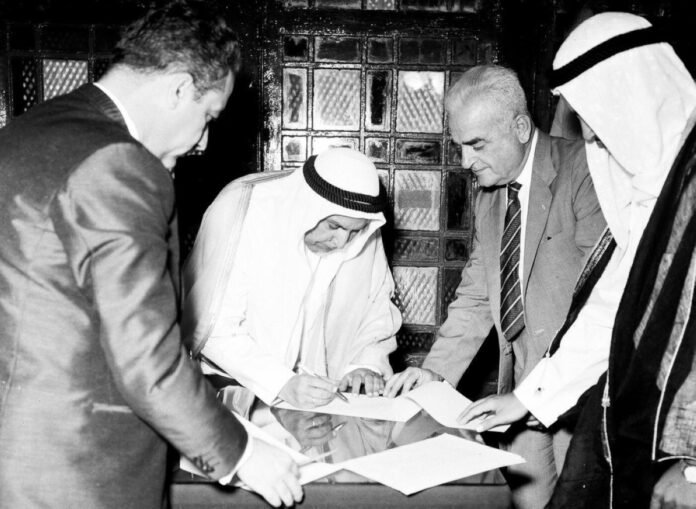
Kuwait marked the 65th anniversary of its independence on Friday, commemorating a defining moment in the country’s history that laid the foundations for its modern state and established its place on the international stage.
The anniversary recalls June 19, 1961, when Kuwait declared its independence and ended its protectorate arrangement with Britain under the leadership of Abdullah Al-Salem Al-Sabah, ushering in a new era of sovereignty and self-governance.
For many Kuwaitis, the occasion serves as a reminder of the country’s political and institutional development over the past six decades. Independence paved the way for the creation of constitutional and democratic structures that continue to shape public life today.
In the years that followed, Kuwait moved to strengthen state institutions and establish a legal framework for governance. Elections were held for a Constituent Assembly tasked with drafting the country’s constitution, which was completed in 1962 and became the cornerstone of Kuwait’s political system and parliamentary life.
The post-independence period also saw the introduction of a series of laws regulating areas such as nationality, currency, passports and public administration, alongside reforms that expanded the role of the judiciary.
Kuwait simultaneously sought a greater role in regional and international affairs. The country joined the United Nations in 1963, becoming its 111th member state, and continued to build diplomatic ties while supporting principles including state sovereignty, peaceful coexistence and international cooperation.
National celebrations are now observed annually on Feb. 25 following a 1964 decree that combined Independence Day commemorations with National Day, marking the accession of Abdullah Al-Salem.
Sixty-five years after independence, Kuwait continues to pursue economic and social development while maintaining a foreign policy centred on dialogue, preventive diplomacy and cooperation with regional and international partners.
