
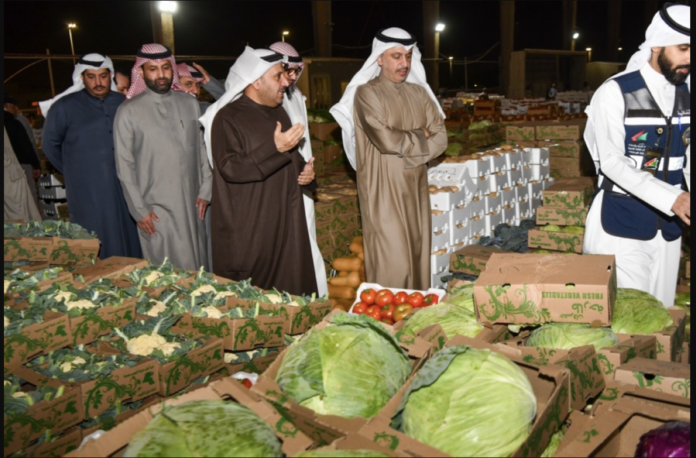
Kuwait’s food supply stability remains strong as farmers and officials reassure citizens amid seasonal transitions and price concerns. Agricultural leaders confirmed local production can meet domestic needs, even during challenging periods.
Representatives from the Kuwait Farmers Union and the Wafra Agricultural Society emphasized that domestic output continues to expand in volume and variety. Officials stressed that the market is resilient, and Kuwaiti produce maintains superior freshness and quality. Officials explained that temporary price fluctuations, especially for items like tomatoes, occur during seasonal cycles. Dr Ahmad Al-Azmi and Ahmed Al-Adwani clarified that the current period, called a seasonal transition, can last two to three weeks as one planting cycle ends and another begins.
To manage supply, the Farmers Union coordinates distribution to ensure all cooperative societies receive their fair share. This prevents monopolization and guarantees a consistent flow of goods to the public. Experts urged residents to avoid panic buying, noting that hoarding often causes food waste. Wholesale prices remain accessible, with zucchini sold for as low as 70 fils and cucumbers between 100 to 150 fils.
Local produce reaches markets within 24 hours of harvest, unlike imported goods that may take a week or more and often contain preservatives. Kuwait has also diversified into fruits like bananas, blackberries, blueberries, and strawberries, along with mushrooms, flowers, and fish. Farmers highlighted specialized crops, including multiple types of cherry tomatoes and various colors of eggplants and peppers. These efforts showcase the sector’s resilience and commitment to national food security.
Government investment supports the agricultural sector with infrastructure, including roads, electricity, and water treatment. Subsidies for farmers, such as discounted diesel for over 7,000 farms, ensure operational efficiency. Officials praised proactive support from the Ministry of Interior, including field visits to address farmers’ concerns. The “Kuwaiti Farmer’s Corner” law further integrates local products into cooperative societies, strengthening the domestic market.
Kuwaiti farmers view their work as a patriotic mission. During the COVID-19 pandemic, many distributed produce for free, demonstrating their commitment to the country. Dr Al-Azmi stated, “The country has given us everything, and we are ready to support it with everything we own.” Food supply stability in Kuwait remains robust, supported by dedicated farmers, government investment, and ongoing community cooperation.
