
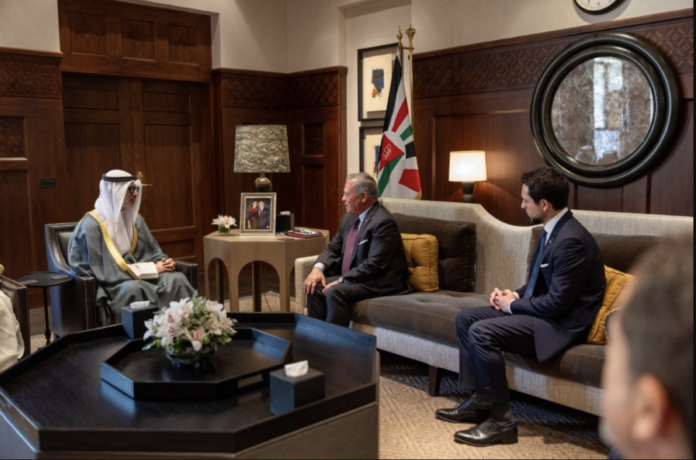
The Gulf regional stability took center stage during high-level talks in Amman as Jordan and Kuwait reaffirmed their shared commitment to easing regional tensions. Leaders from both sides discussed ongoing diplomatic efforts and broader security developments across the Middle East. The meeting highlighted coordination between the two countries during a period of rising regional uncertainty. Officials emphasized dialogue as a key tool for managing escalating challenges.
The Gulf regional stability was strongly emphasized during discussions between Jordan’s leadership and Kuwait’s foreign minister. The meeting brought together Jordan’s king, Crown Prince, and visiting Kuwaiti officials. Both sides reviewed recent regional developments and stressed the importance of maintaining communication channels. They also explored ways to strengthen bilateral cooperation across political and economic sectors.
During the talks, Kuwait’s foreign minister delivered greetings from Kuwait’s leadership to Jordan’s top officials. The message reflected continued respect and close relations between the two nations. In response, Jordanian leaders highlighted shared interests in maintaining regional peace. They also underlined the importance of joint Arab coordination in addressing current crises.
The Gulf regional stability remained a central theme as leaders linked security in the Gulf to wider international peace. Jordan’s leadership stressed that stability in Gulf countries directly influences regional and global security. They also warned that any escalation in tensions could have broader consequences for neighboring states. As a result, both sides called for careful diplomatic engagement.
Discussions also covered developments in Lebanon and other regional hotspots. Officials stressed the importance of supporting sovereignty and internal stability in affected countries. They called for continued efforts to reduce tensions and avoid further escalation. In addition, they highlighted the need for unified Arab positions on key regional issues.
The Gulf regional stability was again reinforced in a separate meeting between senior foreign ministry officials from both countries. They reviewed ongoing coordination mechanisms and discussed future cooperation frameworks. Both sides agreed to maintain regular communication and strengthen diplomatic alignment. This approach aims to support long-term stability in the region.
Officials also addressed the situation in Palestinian territories, emphasizing the need to prevent further deterioration. They called for renewed diplomatic efforts to achieve lasting solutions. Furthermore, they warned against actions that could undermine peace efforts or change the status quo in sensitive areas.
Jordan and Kuwait both expressed commitment to continued coordination in response to evolving regional challenges. They agreed that sustained dialogue remains essential for managing instability. The talks concluded with a shared understanding that cooperation will continue at all levels.
The Gulf regional stability remains a guiding principle in relations between the two countries. Both governments continue to prioritize diplomacy as a means to address regional tensions and support long-term peace.
