
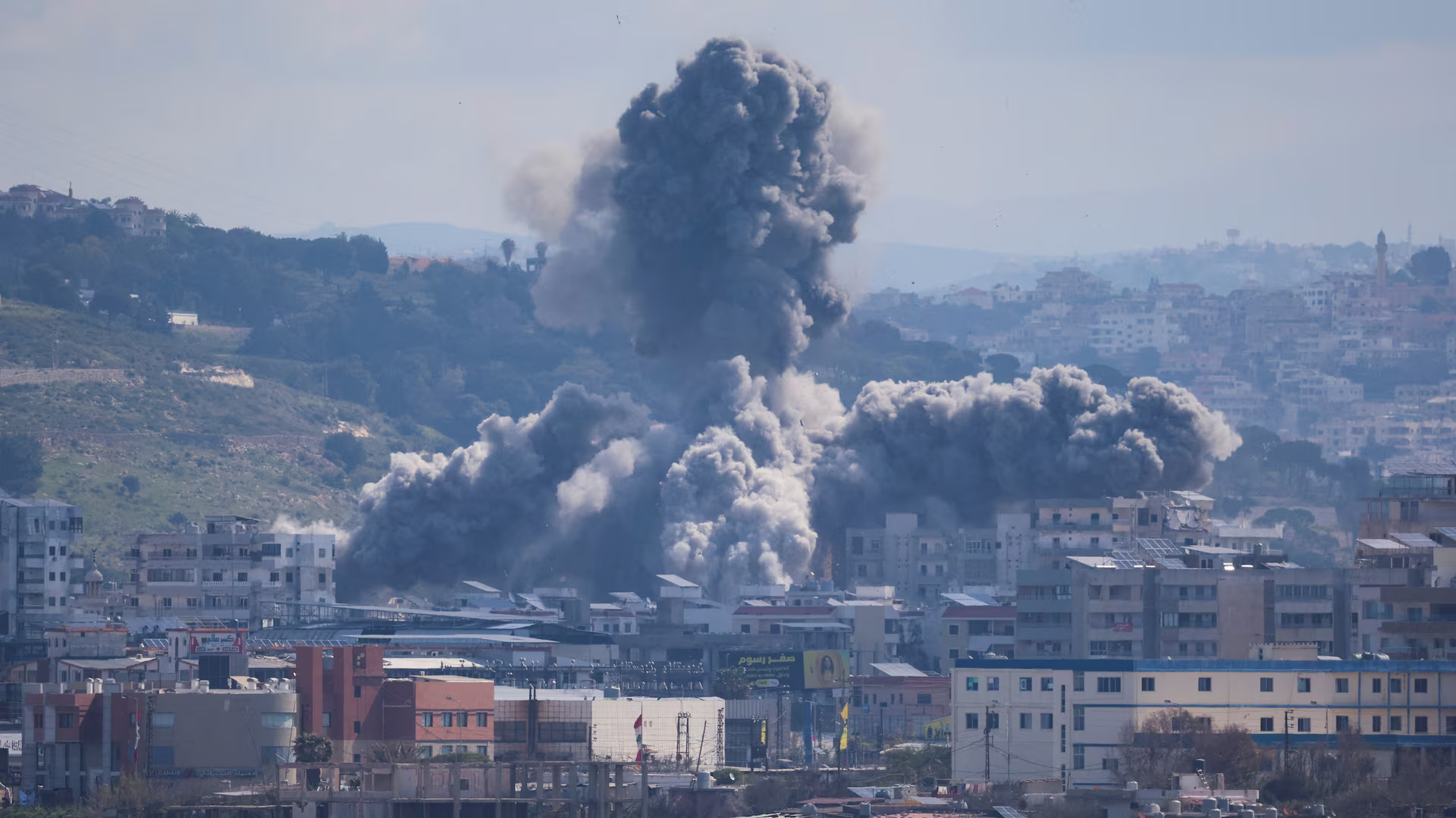
Israeli strikes killed at least 11 people across southern Lebanon’s Nabatieh district early Monday. The attacks also wounded five others and struck residential areas, civilian vehicles, and locations identified by Israel as militant facilities.
In Kfar Remman, Israeli warplanes hit a three-story residential building shortly after midnight. The strike killed nine people, including two infants, while emergency teams treated five wounded residents.
The attack caused heavy casualties in a densely populated area and raised further concerns about civilian safety. Meanwhile, another Israeli drone targeted a civilian vehicle in the same town.
That drone strike killed two paramedics affiliated with the Islamic Risala Scout Association. The Lebanese organization operates scouting and emergency-response activities, including services for communities affected by violence.
Israeli aircraft also conducted several raids around Nabatieh Al-Fawqa and Arabsalim. Those attacks formed part of a broader series of overnight strikes across the Nabatieh district.
In Deir Al-Zahrani, the Israeli military issued an evacuation warning before destroying another building. Authorities instructed residents to move at least 300 meters away from the targeted location.
However, Israeli warplanes destroyed the building roughly 22 minutes after the evacuation warning. The Israeli military identified the location as a Hezbollah facility and connected the attack to ongoing tensions.
The Israeli army alleged that Hezbollah had launched a drone carrying explosives toward Israeli forces. It described that action as a serious breach of the ceasefire arrangement.
Hezbollah had not publicly responded to the accusation at the time of the reported attacks. Consequently, the circumstances surrounding the alleged drone incident remained contested between the parties.
Lebanon’s Health Ministry has reported a much larger toll from Israeli attacks since renewed violence intensified. Between March 2 and September 6, authorities recorded 4,362 deaths and 12,378 injuries.
The figures cover the cumulative impact of attacks during the period and include casualties from multiple areas. Furthermore, Lebanese military officials have documented thousands of Israeli attacks since the framework agreement took effect.
According to Lebanese Armed Forces records, more than 5,000 Israeli attacks have occurred since the agreement’s signing. The reported figure highlights the continued security pressure facing communities across Lebanon.
The latest Israeli strikes have also drawn attention to the risks facing emergency personnel. Paramedics and other responders often operate in dangerous conditions while assisting people affected by military operations.
The deaths in Kfar Remman add to concerns about civilian casualties, particularly among children and families. The presence of infants among those killed has intensified the humanitarian dimension of the latest escalation.
At the same time, repeated evacuation warnings and subsequent attacks have created additional uncertainty for residents. Families in affected communities must respond quickly while facing limited information about safe areas.
Lebanese authorities continue to document casualties and damage as military activity persists across southern areas. Meanwhile, local emergency teams remain responsible for treating survivors and responding to new incidents.
The latest developments underscore the fragile security situation along Lebanon’s southern areas. Despite the existing ceasefire framework, exchanges of accusations and military actions continue to threaten stability.
Israeli strikes therefore remain a major concern for communities living near affected areas. Continued attacks could further increase casualties while placing additional pressure on Lebanon’s emergency and healthcare services.
The latest incidents also demonstrate how quickly military operations can affect civilians and emergency responders. As authorities assess the damage, questions remain about the durability of the current ceasefire arrangements.
