
Since Iraq’s parliamentary election, political factions have engaged in intense negotiations to shape the next government. From the beginning, Iraq’s post-election political uncertainty has dominated discussions about coalition-building, leadership, and national stability. Moreover, analysts warn that delayed agreements could weaken governance and deepen existing economic challenges.
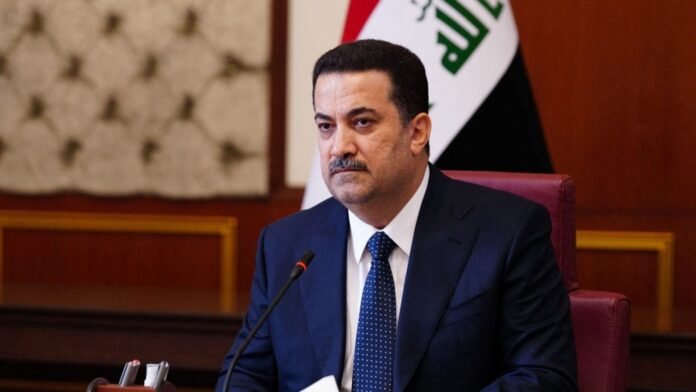
The November vote did not produce a decisive majority, leaving parties to form alliances strategically. Prime Minister Mohammed Shia al-Sudani’s party won the largest number of seats, but the results require coalition support. Consequently, al-Sudani must navigate complex negotiations with the Coordination Framework, a coalition of Iran-backed Shiite parties, to secure his political future.
Observers note that the Coordination Framework is unlikely to back al-Sudani’s reelection, given his growing political strength. Political analysts highlight lessons from previous leaders, focusing on that ambitious prime ministers often face opposition from powerful coalitions. Therefore, Iraq’s post-election political uncertainty remains closely tied to the selection of a candidate acceptable to both Iran and the United States.
The absence of the Sadrist movement, which boycotted the vote, also shifted power dynamics. Their non-participation created electoral vacuums in Baghdad and southern governorates, letting rival factions to strengthen their positions. In total, groups with armed wings secured more than 100 parliamentary seats, the highest showing since 2003, further complicating coalition negotiations.
Sunni political groups are reorganizing under the National Political Council to regain influence lost in recent elections, while Kurdish parties continue negotiations between the Kurdistan Democratic Party and Patriotic Union of Kurdistan. By convention, Iraq’s president will be a Kurd, the prime minister Shiite, and the parliamentary speaker Sunni, shows the delicate balance of power.
The following government faces daunting economic challenges. Public debt exceeds 90 trillion dinars ($69 billion), and the state budget relies on oil for roughly 90% of revenue. At the same time, entrenched corruption hampers efficient resource management. Furthermore, the future of the Popular Mobilization Forces, a coalition of militias with substantial autonomy, remains unresolved.
Recent regional conflicts, including attacks on U.S. bases in retaliation for the Gaza war, intensified concerns about armed factions’ influence. U.S. officials reportedly warned against selecting prime ministers controlling militias or granting them key security posts. Thus, Iraq’s post-election political uncertainty extends beyond parliament to national security and regional stability.
In conclusion, Iraq faces a complex period where coalition-building, economic pressures, and militia influence intersect. Political leaders must act decisively to reduce instability, manage armed groups, and secure broad-based support. Analysts emphasize that resolving Iraq’s post-election political uncertainty will determine both domestic governance and regional relations for the coming years.
