
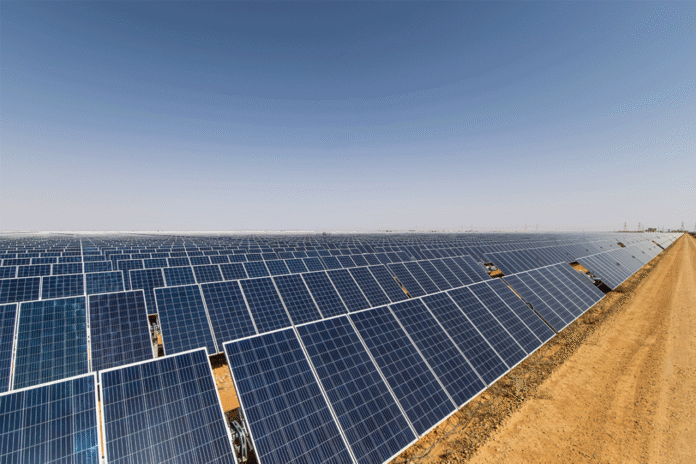
Iraq solar energy takes a major step forward with the launch of the country’s first industrial-scale solar plant in Karbala desert. Moreover, the project aims to improve electricity supply and reduce reliance on fuel during peak daytime hours.
The plant, located southwest of Baghdad, stretches across a vast desert area. In addition, long rows of black solar panels create the appearance of a dark city amid sand. Safaa Hussein, the plant’s executive director, said the facility represents a first for Iraq in both size and capacity.
This initiative reflects Iraq’s efforts to expand renewable energy production. However, despite its oil and gas wealth, the country faces frequent electricity shortages, especially during summer months. Consequently, many households rely on diesel generators or endure extreme heat without air conditioning.
At full capacity, the Karbala plant will produce up to 300 megawatts of electricity. Furthermore, Nasser Karim al-Sudani, who heads the national team for solar energy projects, said other projects are underway. These include a 225-megawatt facility in Babil province and a planned 1,000-megawatt plant in Basra.
Deputy Minister of Electricity Adel Karim emphasized the scale of Iraq’s solar ambitions. Additionally, he noted that projects totaling 12,500 megawatts are in various stages of approval, implementation, or negotiation. If completed, these plants could supply 15 to 20 percent of Iraq’s electricity demand, excluding the northern Kurdish region.
Karim added that electricity from these solar projects would be purchased at competitive prices and offered to consumers affordably. Moreover, the government hopes this will reduce dependence on imported Iranian gas and electricity, which previously met part of Iraq’s demand.
Currently, Iraq produces between 27,000 and 28,000 megawatts, while consumption ranges from 50,000 to 55,000 megawatts. Meanwhile, power plants fueled by Iranian gas supply roughly 8,000 megawatts, creating vulnerability to political changes and sanctions.
Officials stress that expanding Iraq solar energy is critical for national stability and environmental improvement. In addition, reducing fuel use and emissions will contribute to cleaner energy production. Experts suggest that scaling renewable energy could also attract investment and strengthen Iraq’s energy independence.
Looking ahead, the government plans to continue developing solar capacity across multiple provinces. Therefore, these efforts align with broader goals to modernize Iraq’s energy infrastructure and mitigate chronic electricity shortages. Consequently, the Karbala plant represents the first tangible step toward a renewable-powered future.
