
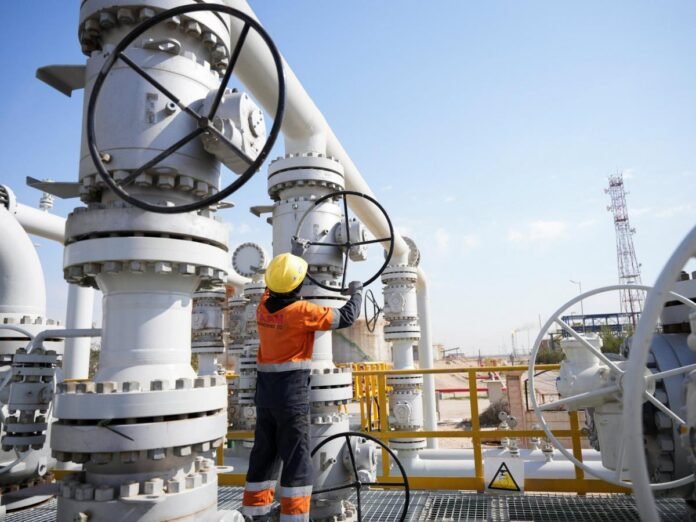
Iraq oil export restart marks a major shift in the country’s energy strategy as exports resume through the Kurdistan Region pipeline. Authorities confirmed the move after a three-year suspension. The decision comes amid regional tensions and disrupted global energy routes.
Moreover, officials began pumping oil from the Sarlo station in Kirkuk early in the morning. They directed crude toward the Turkish port of Ceyhan. As a result, Iraq re-entered international oil markets through a key northern route.
In addition, production targets reached around 250,000 barrels per day. This volume flows through coordination between federal and regional authorities. Therefore, the restart strengthens Iraq’s export capacity during a sensitive period.
At the same time, the Iraq oil export restart reflects urgent economic adjustments. The country previously depended heavily on southern export routes. However, recent disruptions forced officials to diversify shipping options.
Furthermore, the agreement involved coordination between Baghdad and the Kurdistan Regional Government. Representatives from both sides monitored the process at key stations. Consequently, cooperation improved after months of stalled negotiations.
Meanwhile, oil markets responded quickly to the development. Prices dropped slightly after supply resumed, according to market reports. This reaction shows how sensitive global energy markets remain to supply changes.
In addition, officials linked the restart to a broader national decision. They emphasized the need to protect economic stability during regional instability. Therefore, the Iraq oil export restart plays a crucial role in safeguarding revenue flows.
On the other hand, previous exports stopped in 2023 following an international arbitration ruling. That suspension forced Iraq to rely more heavily on alternative routes. As a result, economic pressure increased on national finances.
Moreover, regional developments also influenced the decision. Ongoing tensions in the region disrupted key maritime routes. Therefore, Iraq accelerated efforts to secure land-based export alternatives.
In addition, Baghdad requested increased export capacity through the northern pipeline. Officials proposed combining federal and regional production for higher output. Consequently, this plan aims to strengthen long-term export resilience.
Furthermore, energy authorities warned earlier about risks if exports remained blocked. They highlighted potential damage to national interests and revenue stability. Therefore, the restart addresses both economic and strategic concerns.
Looking ahead, Iraq oil export restart may reshape regional energy flows. Authorities will likely continue negotiations to stabilize production and transport. Iraq oil export restart therefore represents a critical step in securing economic continuity.
The development highlights Iraq’s effort to adapt under pressure. It also shows increasing cooperation between federal and regional institutions. Iraq oil export restart stands as a key milestone in the country’s energy sector recovery.
