
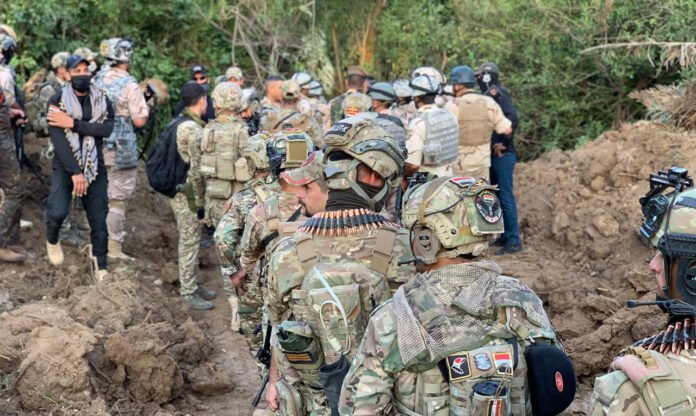
Iraq increased its counterterrorism pressure early Wednesday as security forces carried out a large sweep in Tarmiya, north of Baghdad. The operation began before dawn, and teams moved quickly because security progress matters during ongoing threats. Iraq continues to intensify its field presence, and officials believe today’s actions strengthen that effort.
The raid followed new surveillance readings, and security teams tracked suspicious movement in the Azari orchards. They relied on drones and thermal sensors, and the technology helped them identify five armed individuals. Troops then moved toward the orchards, and they also used mortar fire to clear safe paths for ground units. The coordinated effort showed strong teamwork, and the forces pushed forward with steady confidence.
Moreover, Iraq aims to reshape its security landscape, and operations like this one support that goal. The teams advanced through the orchards, and they continued to tighten the perimeter. Every step today demonstrated Iraq’s determination to confront militant pockets, and officials hope the sweep brings new momentum. They understand that security progress matters, especially in areas with frequent threats.
Even though Iraq defeated ISIS territorially in 2017, the group still seeks new chances to strike. Therefore, security forces continue to monitor several hotspots, and Tarmiya remains one of them. ISIS cells operate quietly, and they use guerrilla tactics to disrupt stability. They move through orchards, villages, and remote passages, and they often target civilians and security personnel. Iraq works to limit these movements, and each operation helps reduce their space to operate.
Additionally, officials recognize the importance of consistent pressure. They continue to monitor the Triangle of Death region, which includes Kirkuk, Saladin, and Diyala. These areas hold several hidden routes, and militants use them to avoid detection. Iraq responds with stronger intelligence efforts, and teams coordinate across provinces to close more gaps. The public continues to support these operations, because communities want lasting safety.
Earlier this year, Iraq intensified its counterterrorism strategy. Security teams tracked and eliminated 50 ISIS fighters, and they arrested more than 40 others. These actions strengthened national stability, and they improved confidence inside several provinces. Iraq plans more coordinated operations, and officials believe the country can restrict ISIS activity even further.
As today’s sweep continues, Iraq remains focused on full control of Tarmiya. The country aims to protect every community, and leaders expect more field activity in the coming days. They continue to stress one message: security progress matters, and Iraq intends to maintain that progress.
