
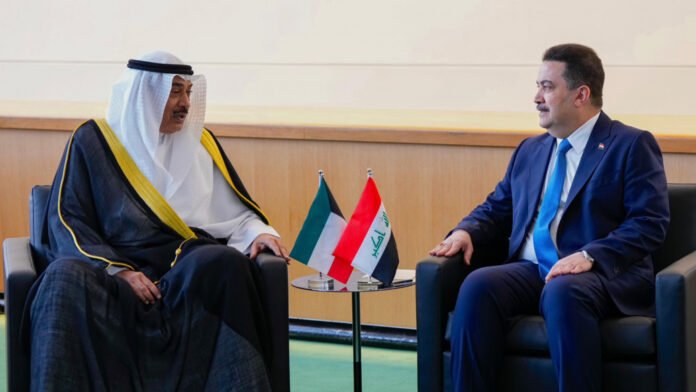
Iraq faces fallout over Khor Abdullah maritime treaty after a 2023 court ruling declared it unconstitutional. The decision invalidated the treaty signed with Kuwait, sparking legal confusion and political tension ahead of Iraq’s upcoming elections.
The agreement, signed in 2012 and ratified in 2013, aimed to regulate navigation in shared Gulf waters. However, Iraq’s Supreme Federal Court ruled that the parliamentary vote failed to meet constitutional standards. The court ruled that international agreements require a two-thirds majority.
As a result, many lawmakers have demanded immediate action. Some want the government to inform the United Nations of the annulment. Others argue the treaty remains partially valid until properly amended or re-ratified. Conflicting views have stirred political divisions, especially with elections set for November 11.
Although Prime Minister al-Sudani’s allies claim the backlash is politically motivated, criticism continues to grow. The prime minister is campaigning through a new bloc called Reconstruction and Development. Political opponents accuse him of avoiding the court’s decision for electoral gain.
At the same time, former Transport Minister Amir Abdul Jabbar Ismael filed a legal complaint. He claimed that the prime minister blocked communication with international maritime bodies. In response, the prime minister filed a counter-complaint, calling the accusations defamatory.
Legal experts warn that ignoring the ruling could damage Iraq’s maritime standing. Wael Abdullatif, a former judge, said the court’s decision is final and must be implemented. He emphasized the long-term risks to Iraq’s sovereignty if delays continue.
Additionally, the Khor Abdullah maritime treaty dispute has alarmed economic and legal analysts. Iraq still lacks a recognized Exclusive Economic Zone in the Gulf. Without legal claims or active diplomacy, Iraq could lose marine rights to neighboring states.
Recent talks between Iraq and Kuwait aimed to resolve overlapping claims. However, many Iraqi officials remain skeptical. They fear further negotiations beyond UN marker 162 could reduce Iraq’s access to key waters and ports.
Meanwhile, the Iraqi president, prime minister, and speaker issued a joint statement. They reaffirmed Iraq’s commitment to international obligations and called for a constitutional review of the treaty.
Ultimately, resolving the Khor Abdullah maritime treaty dispute requires transparency, legal compliance, and diplomatic outreach. Iraq must act swiftly to protect its maritime interests and political credibility.
