
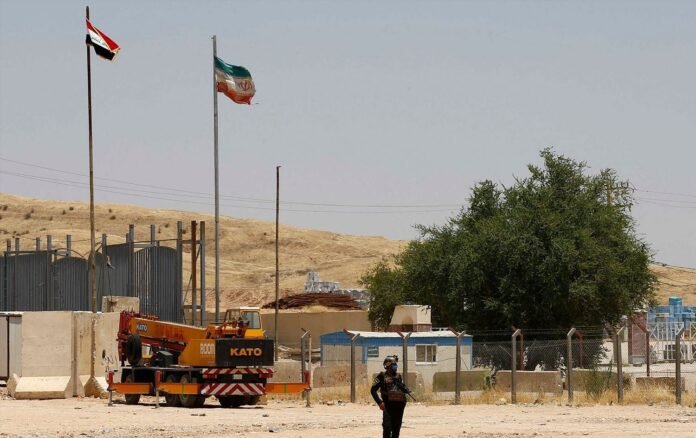
Iraq border operations continue uninterrupted despite escalating regional tensions, ensuring trade and imports remain steady. Officials confirmed all official land crossings are fully open, allowing commerce to proceed across the country without disruption. This stability highlights the government’s commitment to maintaining supply chains amid the ongoing conflict affecting neighboring regions.
Alauddin al-Qaisi, spokesperson for the Border Ports Commission, emphasized that all land crossings remain operational, supporting economic continuity. He stated that commercial movement continues normally, and goods are entering Iraq without any significant delays. Meanwhile, border staff are fully deployed at seaports and land crossings to guarantee smooth daily operations for traders and transporters.
Crossings at Trebil, Arar, Safwan, and al-Qaim remain ready to handle traffic if any other ports face temporary issues. This redundancy ensures Iraq border operations remain resilient against potential disruptions caused by regional instability. Officials stressed that keeping these crossings active is critical for sustaining the national economy during airspace closures.
Air travel continues to face restrictions due to the ongoing regional conflict involving the United States, Israel, and Iran. Airports remain closed for safety reasons, with the Civil Aviation Authority extending the airspace shutdown for an additional 72 hours. Despite this, land trade continues uninterrupted, demonstrating Iraq border operations’ crucial role in economic resilience.
Omar al-Waeli, head of the Border Ports Commission, reported that container processing at seaports proceeds efficiently, following all legal procedures. Shipping activity at Umm Qasr and al-Faw ports continues under close monitoring to ensure essential goods reach markets on time. Trade ministry officials confirmed that food and essential supplies remain available and markets are sufficiently stocked.
Trade with Iran experienced a slowdown following the twelve-day Israel-Iran conflict in June 2025, but authorities now closely monitor imports and exports. Mohammed Hanoun, ministry spokesperson, emphasized that Iraq border operations support balanced trade and help stabilize the flow of goods. Exports, valued at $178 million, continue to sustain regional commerce despite previous challenges.
Overall, Iraq border operations are functioning reliably and efficiently, providing a critical lifeline for commerce during regional instability. Government officials continue prioritizing safety while maintaining trade flows and ensuring that essential goods reach communities nationwide. These measures demonstrate Iraq’s commitment to preserving economic stability amid ongoing geopolitical tensions.
