
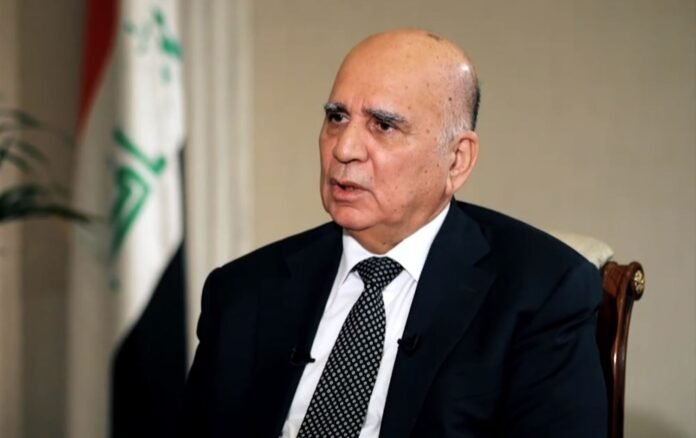
Iraq’s foreign minister held separate calls with his Omani and Iranian counterparts to discuss upcoming nuclear talks between Washington and Tehran, emphasizing diplomacy as tensions rise across the region.
Fuad Hussein spoke Sunday with Badr bin Hamad Al Busaidi and Abbas Araghchi about preparations for the third round of negotiations. Officials confirmed that American and Iranian negotiators plan to meet in Geneva later this week.
According to Iraq’s foreign ministry, Hussein and Busaidi stressed the importance of ensuring the success of the nuclear talks. Both sides warned that failure could heighten the risk of broader regional conflict. They also underlined the need to strengthen stability through dialogue.
During his separate conversation with Araghchi, Hussein reiterated Baghdad’s support for peaceful engagement. The two diplomats agreed that sustained communication remains essential under current sensitive circumstances. They committed to maintaining coordination in the coming period.
Oman has played a key mediating role since indirect negotiations began earlier this year. Muscat previously facilitated two rounds of discussions between the United States and Iran. The upcoming Geneva meeting represents another attempt to narrow differences over Tehran’s nuclear activities.
Washington continues pressing Iran to curb uranium enrichment levels. Meanwhile, Tehran maintains that its nuclear program serves exclusively peaceful purposes. Despite diplomatic engagement, rhetoric between both governments intensified in recent days.
Donald Trump signaled he could decide within days whether to authorize military action if negotiations fail. He urged Iran to reach an agreement and warned that alternatives could follow if diplomacy collapses. Trump stated that the coming days would determine whether a deal remains possible.
Iranian officials indicated they intend to present a structured proposal outlining a potential framework for compromise. State media reported that Araghchi plans to submit a draft within weeks. Diplomats hope that renewed exchanges will reduce uncertainty surrounding the nuclear talks.
Baghdad continues advocating de escalation amid mounting pressure in the Gulf. Iraqi officials fear that renewed confrontation could destabilize neighboring states and undermine regional security. Consequently, Hussein’s outreach reflects Iraq’s effort to encourage constructive engagement.
As preparations continue for the Geneva meeting, regional leaders closely monitor developments. The outcome of the next round of nuclear talks could shape the trajectory of Middle East diplomacy in the months ahead.
