
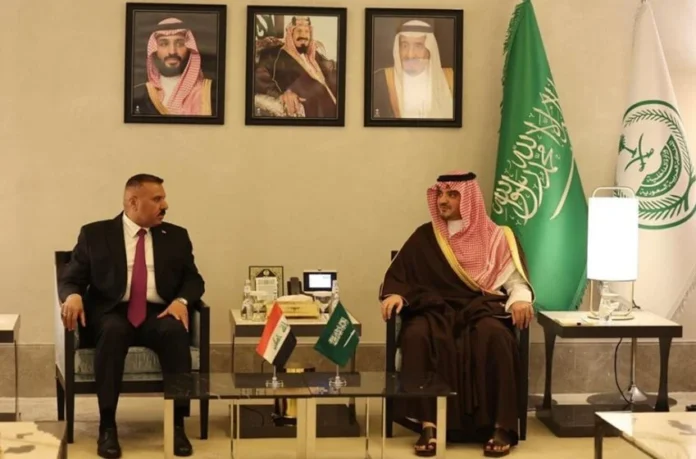
Iraq Saudi security coordination is gaining urgency as regional tensions continue to rise across the Middle East. Iraqi Interior Minister Abdul-Amir al-Shammari held a phone call with Saudi Interior Minister Abdulaziz bin Saud bin Nayef to address growing security concerns.
During the call, both sides reviewed recent developments affecting the region. Moreover, they discussed the security consequences of the ongoing conflict involving Iran, the United States, and Israel. As tensions escalate, both countries face increasing pressure to respond effectively.
Al-Shammari highlighted Iraq’s commitment to maintaining regional stability. In addition, he stressed the importance of strong partnerships with neighboring countries. He also expressed appreciation for Saudi Arabia’s recent support during the crisis. Specifically, Saudi authorities helped facilitate the return of stranded Iraqi citizens through their territory.
Meanwhile, the Saudi minister outlined current security challenges facing the Kingdom. He explained that Saudi Arabia continues to deal with drone and missile threats. Furthermore, he linked these risks to the broader regional escalation. These developments have raised serious concerns about long-term stability.
Iraq Saudi security coordination remains essential as both nations confront shared threats. Therefore, both ministers emphasized the need for continued collaboration. They agreed to strengthen communication channels and enhance joint efforts. This approach aims to address cross-border risks more effectively.
In recent years, Iraq and Saudi Arabia have steadily improved their security relationship. For example, they signed agreements to boost border security cooperation. Additionally, they have worked together to counter regional threats and organized crime. These steps have built a stronger foundation for ongoing coordination.
However, the current crisis has introduced new challenges. Iraq now faces increased pressure due to the conflict’s spillover effects. Attacks have targeted diplomatic missions, infrastructure, and key facilities across the country. As a result, authorities remain on high alert.
Moreover, officials warn that instability could spread further if tensions continue. Consequently, both countries see coordination as a critical tool for crisis management. Iraq Saudi security coordination could help limit risks and support regional stability.
Looking ahead, both sides plan to maintain close contact. They aim to respond quickly to any emerging threats. At the same time, they seek to protect their national interests and ensure public safety.
