
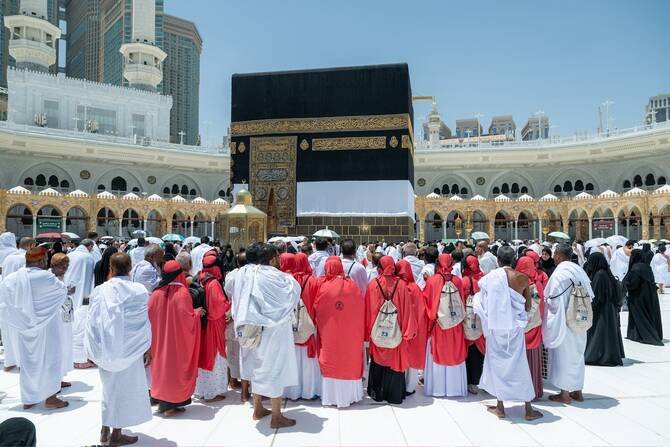
Saudi Iran Hajj coordination has taken a central role as Iranian pilgrims begin arriving in Saudi Arabia for the annual Hajj pilgrimage. The first groups reached the Kingdom as part of organized travel arrangements supported by both Saudi and Iranian authorities. Officials confirmed that additional waves of pilgrims will follow in the coming days. The process reflects continued cooperation between both countries in managing one of the world’s largest religious gatherings.
The Saudi Iran Hajj coordination effort ensured smooth entry procedures for the initial group of Iranian pilgrims. These arrivals included administrative and support teams responsible for organizing logistics on the ground. The pilgrims began arriving shortly after Iran reopened its airspace, allowing direct travel to the Kingdom. Authorities expect more arrivals as travel schedules continue to operate normally.
Iran’s ambassador to Saudi Arabia confirmed that a second group of pilgrims will arrive soon. He emphasized that Saudi authorities have welcomed Iranian pilgrims alongside millions of others from around the world. He also noted that both countries maintain coordination to ensure safe and organized travel arrangements for all participants.
The Saudi Iran Hajj coordination also extends to communication between diplomatic missions. The Iranian embassy in the Kingdom continues to work with Saudi officials to address logistical needs. These include transportation, accommodation, and support services during the pilgrimage period. Both sides aim to ensure that pilgrims can perform their rituals without difficulties.
Officials highlighted recent diplomatic communication between the foreign ministers of both countries. These discussions covered regional developments and broader cooperation efforts. Such engagement has helped maintain operational coordination during the Hajj season. It also supports ongoing dialogue between Riyadh and Tehran.
Saudi authorities continue to implement large-scale systems to manage pilgrim services. These systems include travel facilitation programs designed to streamline entry procedures. The Kingdom has developed structured mechanisms to support millions of pilgrims annually. These efforts aim to improve efficiency and reduce travel delays.
The Saudi Iran Hajj coordination reflects broader improvements in bilateral engagement over recent years. Despite regional differences, both sides have maintained practical cooperation in religious affairs. This cooperation ensures that Iranian pilgrims can participate in Hajj under stable and organized conditions.
Officials from both countries expressed hope that pilgrims will complete their rituals safely and return home without complications. They also emphasized the importance of continued coordination throughout the pilgrimage season. As more groups arrive, both governments remain focused on maintaining smooth operations.
The ongoing Saudi Iran Hajj coordination demonstrates how religious obligations can encourage structured cooperation even in a complex regional environment.
