
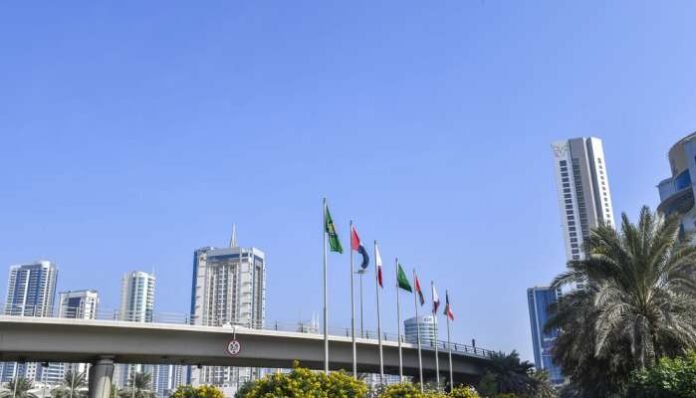
Manama, Bahrain – Leaders from the Gulf Cooperation Council (GCC) gathered in Manama this Wednesday for the 46th GCC Summit, highlighting the critical role of Gulf integration in shaping regional prosperity. The summit aims to strengthen cooperation, promote economic growth, and enhance political and security coordination across member states.
The summit agenda includes reviewing the GCC’s collective progress in political, economic, and security fields. Leaders will exchange perspectives on regional developments and explore joint strategies for peace and stability. Additionally, discussions will focus on advancing shared economic projects and boosting cooperation among member states.
GCC Secretary-General Jassem Mohammed Al Budaiwi emphasized the need to reinforce all pillars of Gulf, regional, and international collaboration. He expressed hope that the summit will deliver practical recommendations, contributing to the region’s shared prosperity.
The 45th GCC Summit, hosted in Kuwait in December 2024, achieved key agreements on clean energy adoption, sovereign fund investments in technology, and joint action in energy, food security, and climate. Leaders also approved initiatives linking transport projects, electrical grids, and artificial intelligence to the region’s economic vision.
GCC economies showed balanced growth in 2024, with GDP rising 1.9 percent. Non-oil sectors expanded 4.4 percent, driven by tourism, renewable energy, manufacturing, and technology investments. Economic forecasts indicate growth will accelerate to 2.8 percent in 2025, 3.7 percent in 2026, and 4.3 percent in 2027.
Foreign direct investment into GCC states reached approximately US $523.4 billion in 2023. This demonstrates the international community’s confidence in the Gulf’s business environment. Intra-GCC investments also grew from US $88.2 billion in 2015 to US $130.3 billion in 2023.
The summit will consider initiatives to enhance transportation, civil aviation, and tourism. The Gulf Railway project, which will physically link all six member states, remains a top priority. Leaders also discussed the potential unified Gulf tourist visa, which would simplify travel and boost economic activity.
The GCC’s economic integration continues to advance through policies that promote trade, energy cooperation, and private sector development. Member states aim to diversify income sources, strengthen infrastructure, and foster innovation. Cooperation in cybersecurity, renewable energy, and logistics also remains central to the Gulf integration strategy.
Preparatory meetings of GCC Foreign Ministers were held in Manama, during which Kuwait transferred the Ministerial Council presidency to Bahrain. The summit underscores a collective commitment to deeper Gulf integration, stronger regional security, and sustainable development.
Overall, the 46th GCC Summit reinforces the shared vision of the Gulf states. By focusing on Gulf integration, leaders aim to secure economic growth, regional stability, and long-term prosperity for all citizens. The summit marks another step forward in the Council’s mission to unite the Gulf nations and strengthen their global presence.
