
Early Childhood care has become the focus of a new national initiative launched by Kuwait’s Ministry of Health and National Bank of Kuwait. The program aims to monitor children’s development while providing families with guidance and healthcare support.
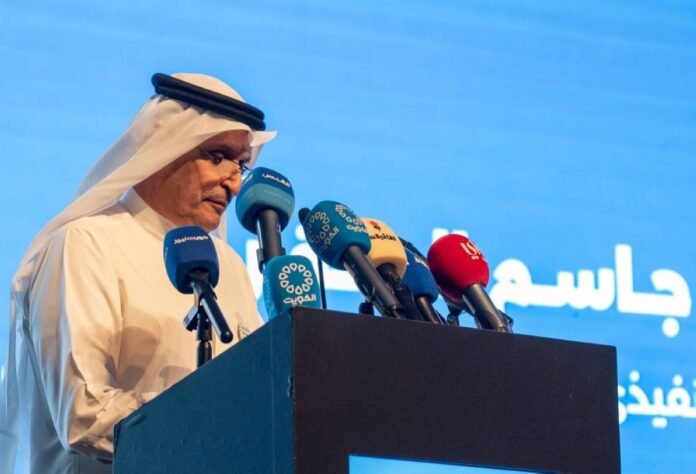
Health Minister Dr Ahmad Al-Awadhi announced the initiative during its launch ceremony on Tuesday. He described early childhood care as an important part of Kuwait’s health and development priorities. The program establishes a structured approach that connects developmental monitoring with family support and healthcare services.
The ministry’s approach begins before birth and continues throughout a child’s early development. It includes health counseling, premarital screening, and genetic assessments when healthcare professionals consider them necessary. Furthermore, the approach continues through pregnancy care, newborn services, vaccinations, and regular monitoring of growth.
Al-Awadhi said the ministry also aims to help families access knowledge and services throughout childhood. Parents play a central role in supporting children, while healthcare providers offer guidance when concerns emerge. Therefore, the initiative combines professional monitoring with practical information designed for parents and caregivers.
Kuwait has also recorded improvements in child health indicators over recent decades. The country’s under-five mortality rate declined from 12.7 cases per 1,000 children in 2000. By 2023, that figure had fallen to 8.8 cases per 1,000 children, according to official international development indicators.
The minister said the progress creates an opportunity to strengthen services supporting children’s survival and development. Consequently, the new initiative focuses not only on health protection but also on learning and quality of life. The program seeks to identify developmental concerns while providing families with appropriate information and support.
Early Childhood services under the initiative include two main programs with complementary functions. The first is the National Developmental Screening Program, which monitors several areas of childhood development. The second is the Bada’a platform, which provides parents with practical information about developmental stages and activities.
The screening program uses the Ages and Stages Questionnaire to evaluate different areas of development. These areas include communication, movement, problem-solving abilities, and personal-social interaction. Healthcare teams can use the results to identify indicators that may require additional assessment.
The Bada’a platform provides parents and caregivers with guidance on supporting children through everyday activities. Its resources cover development stages, play, interaction, and activities that can strengthen children’s emerging skills. As a result, families can receive practical information alongside formal healthcare monitoring.
Ministry teams and NBK worked together to establish referral pathways and prepare supporting resources. They also trained healthcare personnel before beginning the phased implementation across health centers. The preparation included training for 240 doctors and readiness measures involving 95 health centers.
Early Childhood screening has already produced initial results through recent community health activities. During last month’s Mother and Child exhibition, healthcare teams screened 170 children. They referred 30 children to hospital pediatricians for additional assessment, representing 18 percent of those screened.
The initiative also introduced evening Well-Baby clinics at 12 health centers during the current week. These clinics provide families with additional opportunities to access child health services outside standard daytime schedules. Moreover, the program plans to expand appointment access through Kuwait’s unified government services application.
Parents will eventually be able to book evening clinic appointments through the Sahel application. The next phase will also provide additional ASQ-3 training for pediatricians working in hospitals. This expansion aims to strengthen consistency in developmental screening across different healthcare settings.
NBK Deputy Chairman and Group Chief Executive Officer Essam Al-Sager said the initiative reflects investment in future generations. He described the partnership as an example of cooperation between Kuwait’s banking sector and government institutions. NBK’s involvement began developing more than two years ago and extends beyond financial assistance.
Meanwhile, Dr Wafaa Al-Otaiqi said the joint team began its work in May 2026. Within three months, the team established unified policies and referral pathways for participating healthcare services. The preparation helped establish a consistent framework for identifying concerns and directing families toward appropriate care.
Developmental pediatrician Dr Nahed Al-Otaiqi also highlighted the importance of identifying possible delays early. Early screening can help healthcare professionals recognize children who may require additional evaluation. Families can then receive guidance based on screening findings and further professional assessments.
The initiative therefore creates a more coordinated approach to monitoring childhood development across Kuwait’s healthcare system. It combines screening, professional referrals, family education, and accessible health services within one broader framework. Additionally, the phased rollout allows healthcare teams to expand services while preparing participating facilities.
Early Childhood support can also help families understand developmental milestones and recognize potential concerns. The initiative gives parents practical resources while connecting them with trained healthcare professionals. This combination provides families with both information and structured access to medical services.
The partnership between the Ministry of Health and NBK also demonstrates cooperation across Kuwait’s public and private sectors. Their joint work has established resources, trained medical personnel, and prepared health centers for implementation. The program will continue expanding as additional services and training enter its next phase.
Overall, Kuwait’s new initiative places developmental monitoring and family support within a coordinated national framework. The program combines screening tools with healthcare referrals and practical guidance for parents. Its phased implementation will determine how effectively the services expand across participating health centers.
