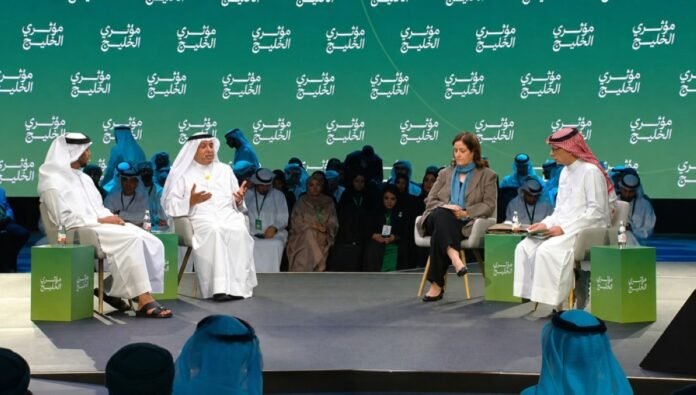
The future of the Gulf media narrative took center stage during a major regional forum held in Dubai on Monday. Media professionals, analysts, and content creators gathered to discuss how Gulf countries can strengthen their international image and present a more coordinated regional voice. The event also explored political developments, regional security concerns, and the growing influence of digital media platforms.
The “Gulf Influencers” forum attracted more than 1,000 participants from across GCC countries. Organizers from the UAE Government Media Office designed the event to encourage stronger cooperation between Gulf media figures and content creators. Discussions focused on creating a shared narrative that reflects regional priorities, humanitarian values, and political interests.
Kuwait participated in the event through several media and political figures. Saad bin Tefla Al-Ajmi joined a session examining how Gulf countries appear in international media coverage. The discussion explored ways to improve the region’s global image and counter negative portrayals through coordinated communication strategies.
Participants stressed that media influence now plays a major role in shaping public opinion and international perceptions. Speakers highlighted the need for Gulf countries to adapt quickly to changing digital trends. They also emphasized the importance of producing professional content that reflects the region’s identity and ambitions.
One panel focused on regional alliances and ongoing geopolitical tensions. Anwar Gargash discussed security concerns related to regional instability and shifting international relationships. He argued that political solutions remain necessary to reduce tensions and improve long-term regional stability.
Gargash also pointed to major changes in global politics and international partnerships. According to him, Gulf states must adopt more flexible strategies while strengthening cooperation with global partners. He added that trust-building requires consistent diplomatic efforts and realistic political approaches.
Another discussion examined whether Gulf countries share a unified regional discourse. Researchers and media experts debated how closely regional messaging aligns across political and social issues. Some participants argued that stronger coordination could improve the Gulf’s influence on global conversations.
Several sessions explored the impact of digital platforms on news coverage and public opinion. Media specialists discussed how narratives now spread rapidly through social media and online content. They noted that content creators increasingly shape political discussions and regional perceptions.
Legal and security experts also joined the forum to discuss regional sovereignty during periods of crisis. Participants reviewed ways Gulf countries can protect their interests while maintaining stability and cooperation. Discussions highlighted the growing connection between media influence, diplomacy, and regional security.
The event also aimed to support young content creators across the Gulf. Organizers encouraged participants to develop impactful digital storytelling skills that communicate local perspectives to international audiences. Officials believe these efforts can strengthen the region’s global presence and create a more influential Gulf media narrative.
As discussions concluded, participants agreed that regional cooperation remains essential in modern media landscapes. Many speakers said a stronger and more coordinated Gulf media narrative could help Gulf countries expand their international influence and better represent their shared priorities.