
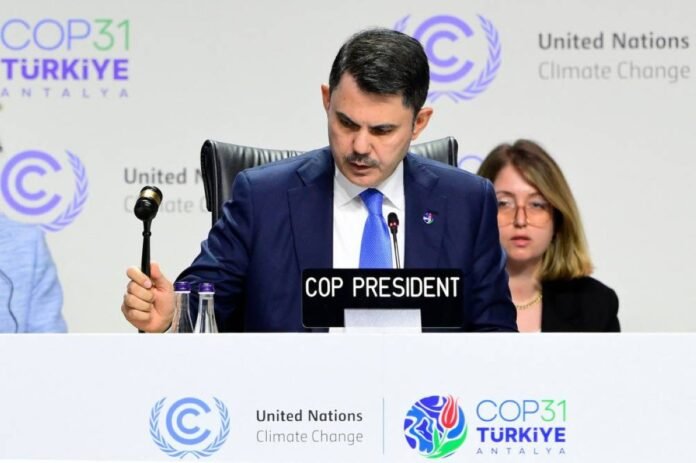
The climate deal at COP31 collapsed after countries failed to resolve a dispute over fossil fuels in Antalya, Türkiye. The summit continued nearly 48 hours beyond its scheduled close, making it the longest United Nations climate conference on record. Delegates left without an agreed declaration outlining a shared response to the climate crisis.
Australia’s Climate Minister Chris Bowen, who led negotiations, said he could not bridge the opposing positions. He described the political climate as exceptionally difficult, with high energy prices and conflict in the Middle East complicating efforts to reach consensus. Because participating countries must approve decisions unanimously, any government can block an agreement.
Negotiators had proposed a final statement that did not mention fossil fuels. Ireland’s climate minister objected, arguing that the text ignored a major cause of climate change. Panama, island nations and several developing countries also refused to support the proposed outcome.
The Marshall Islands’ climate envoy warned delegates that the country would not accept an agreement that threatened its future. Meanwhile, a late proposal included an indirect reference to phasing out fossil fuels. However, opponents considered that language too weak to secure support.
The draft also supported expanding carbon capture, a technology backed by parts of the energy industry. Critics questioned whether it could reduce emissions effectively and raised concerns about its costs. Saudi Arabia’s representative, speaking for the Arab Group, said negotiators should consider every available climate response.
Türkiye and Australia had also proposed a global electrification goal. That proposal aimed to replace equipment that burns fuels directly, such as diesel vehicles and gas heating, with electric alternatives. However, delegates rejected the electrification target along with the broader agreement.
The collapse disappointed countries seeking a clear signal on efforts to limit warming to 1.5 degrees Celsius. Negotiators also clashed over references to climate science and the work of the Intergovernmental Panel on Climate Change. The United Kingdom’s climate representative said the draft weakened the role of scientific evidence.
Beyond the fossil fuel dispute, the talks exposed disagreements about climate finance and responsibility. Developing countries pressed for a $120 billion adaptation funding target to help vulnerable communities prepare for climate impacts. Ghana’s environment minister argued that countries contributing least to emissions face some of the heaviest consequences.
The failed climate deal leaves governments without a shared statement from this year’s summit. Delegates now face pressure to continue negotiations on emissions, adaptation funding and energy transition. The disagreements in Antalya show how difficult it remains to align national priorities with collective climate goals.