
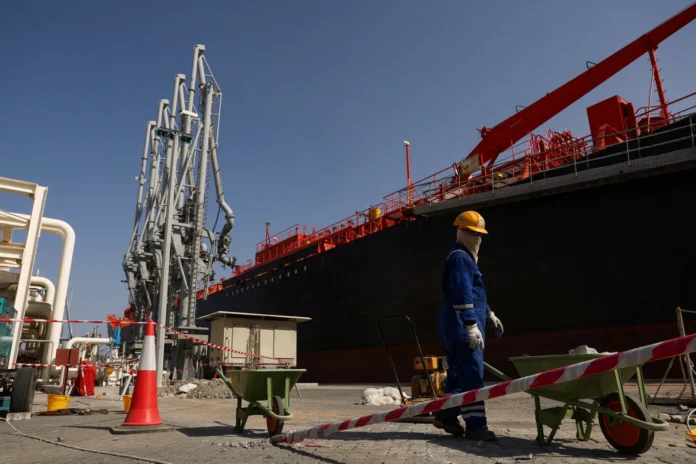
Gulf risk premium helped keep oil prices within a narrow range during Monday morning trading in Asia. Brent crude rose 10 cents to $92.67 a barrel, while US West Texas Intermediate gained 16 cents to $83.57. Both benchmarks had fallen earlier in the session before recovering slightly.
Despite Monday’s modest gains, oil prices recorded losses last week. Brent fell 4 percent, while West Texas Intermediate declined 5 percent. However, continuing attacks on shipping and energy facilities have kept traders alert to possible supply disruptions.
The latest market movements followed reports of attacks around the Gulf and the Strait of Hormuz. Yemen’s Iran-aligned Houthi movement claimed an attack on a Saudi oil refinery on Sunday. Separately, maritime authorities reported several incidents involving shipping over the weekend.
Bahrain also said an attack struck a civilian industrial facility on Saturday. Iran’s Revolutionary Guards, meanwhile, said they launched missiles and drones against US military positions in the kingdom. Bahrain hosts the US Navy’s Fifth Fleet, adding to regional concerns about the conflict.
Diplomatic efforts continue, yet investors are weighing them against the possibility of further escalation. Oil market analyst Vandana Hari said a tense standoff between Washington and Tehran could persist through year-end. She also noted that fresh military action could change the outlook quickly.
Consequently, market participants are watching statements and developments from both sides for clues about the conflict’s direction. Threats and sharper rhetoric can add a geopolitical premium to crude prices. However, prices may remain broadly rangebound unless either side takes more concrete steps toward escalation.
Meanwhile, discussions at the COP31 climate conference in Türkiye ended without agreement on including language about phasing out fossil fuels. The talks marked the first time since 2009 that the conference failed to reach an agreement. Oil-producing countries, including Saudi Arabia, have argued that fossil fuels will remain part of the global economy for years.
OPEC had also defended continued fossil fuel use during the conference. Attention now turns to a series of OPEC+ meetings scheduled for November 29. Ministers will discuss the group’s production policy for 2027, which could influence market expectations in the coming weeks.
For now, Gulf risk premium reflects traders’ concern about security threats near important energy infrastructure and shipping routes. The actual price impact will depend on whether disruptions grow or diplomatic efforts gain momentum. Until then, Gulf risk premium remains one factor shaping oil trading alongside supply policy and recent market losses.