
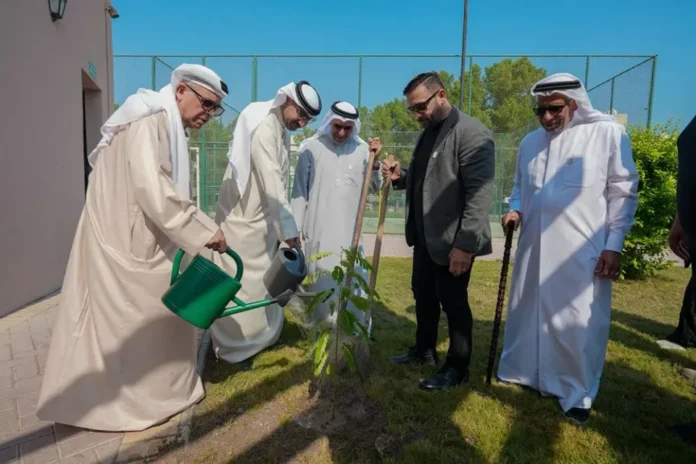
Bahrain has added a baobab tree to Shakhura Garden as part of its annual Tree Week activities. The Northern Municipality organised the planting alongside the Northern Municipal Council and the Friends of Parks group. The initiative aims to expand public greenery while encouraging residents to take greater interest in environmental protection.
The planting also recalls King Hamad bin Isa Al Khalifa’s visit to a baobab tree during his 2024 tour of Bahrain’s southern wilderness areas. During that visit, the King reviewed environmental protection efforts and initiatives to preserve the Kingdom’s natural resources. He also commended the Supreme Council for Environment’s programmes and cooperation with government entities.
The earlier visit highlighted the importance of protecting Bahrain’s wildlife and natural landscapes for future generations. Moreover, the new planting connects those conservation efforts with activities designed to improve everyday public spaces. By introducing distinctive trees into community gardens, municipalities can encourage residents to learn more about plant diversity.
Tree Week runs from October 26 to 31 in 2026, with activities across Bahrain. The campaign encourages tree planting and promotes environmental responsibility in parks, neighbourhoods, schools and sports facilities. In addition, government bodies, private organisations and community groups contribute to these activities.
The baobab offers a particularly distinctive addition to Shakhura Garden because of its unusual shape and thick trunk. Native to parts of Africa, baobabs can store water in their trunks, helping them survive periods of limited rainfall. Consequently, the species has attracted interest for its adaptations to dry and semi-arid environments.
However, the tree’s natural resilience does not remove the need for careful maintenance in Bahrain. Its successful establishment will depend on the particular species, local soil conditions, irrigation and exposure to high temperatures. Therefore, suitable care and regular monitoring will help determine how well it adapts to the garden.
The planting also creates an opportunity to introduce visitors to different tree species and their environmental needs. Furthermore, public gardens can serve as accessible spaces where families and children develop an interest in nature. Community participation can strengthen these efforts by encouraging people to care for shared green spaces.
Bahrain’s wider planting campaign reflects an ongoing focus on increasing vegetation in public areas. Although adding trees can improve the appearance of neighbourhoods, long-term results depend on choosing appropriate species. Equally important, municipalities need to provide consistent care so new plants can establish themselves and continue growing.
The baobab tree at Shakhura Garden therefore represents both a new addition to the local landscape and an environmental learning opportunity. Its progress may offer insight into the practical considerations involved in introducing distinctive species to Bahrain’s urban gardens. Meanwhile, Tree Week gives residents and organisations an opportunity to support greener surroundings through collective action.
As the initiative continues, the tree’s long-term health will depend on appropriate maintenance and suitable growing conditions. Ultimately, the planting highlights how local environmental activities can connect public participation, biodiversity awareness and the development of greener community spaces.
