
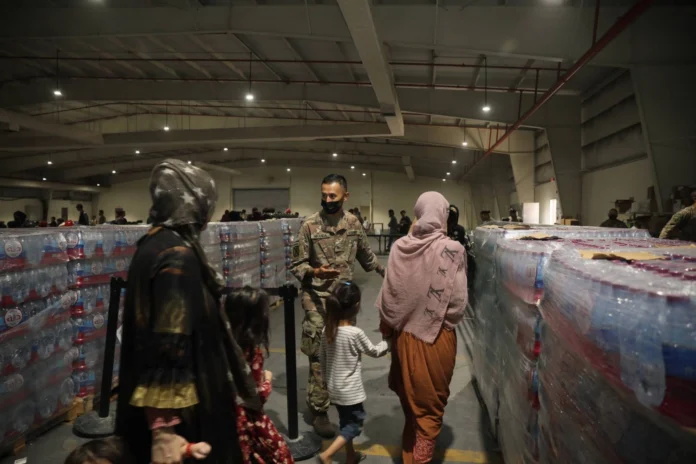
Stalled resettlement plans have left hundreds of Afghan evacuees in prolonged uncertainty in Qatar, highlighting a growing Qatar refugee limbo that continues to raise humanitarian and political concerns. The group, made up of former allies of US forces in Afghanistan, remains stuck at a secured facility near Doha with no clear exit route.
Around 1,100 Afghans and their families live at Camp As Sayliyah on the outskirts of Doha. Many worked as interpreters or supported international forces before the Taliban takeover of Afghanistan in 2021. After evacuation, they expected resettlement in safer countries. However, shifting US immigration policies disrupted those plans.
Residents describe daily life as uncertain and restrictive. Many live in confined housing units and face strict movement limitations. They only leave the site for urgent medical needs. This prolonged situation has deepened what many describe as a Qatar refugee limbo.
The crisis intensified after Washington paused refugee admissions in early 2025. Later, Afghan immigration processing also halted. As a result, resettlement applications remain frozen. Reports also suggest proposals to relocate evacuees to third countries, including the Democratic Republic of Congo, although no official confirmation has been issued.
Residents strongly oppose relocation to unstable regions. They argue that such moves would place them in further danger. Instead, they continue to request safe and permanent resettlement options. Many fear returning to Afghanistan due to security risks under Taliban rule.
Several evacuees report emotional stress and psychological pressure caused by the prolonged wait. Rumors about possible deportation or camp closure circulate frequently. These uncertainties reinforce the ongoing Qatar refugee limbo and deepen frustration among families.
The facility itself, located in a desert area outside Doha, once supported US military operations. Today, it functions as a holding center for displaced Afghans awaiting decisions on their future. Despite its controlled environment, residents say the emotional toll continues to rise.
Security concerns also increased during regional tensions in recent months. Missile activity and nearby military escalations in the Gulf region created additional anxiety among evacuees. Some reported hearing explosions from inside the camp perimeter during regional strikes.
International organizations and advocacy groups continue to call for urgent solutions. They stress that prolonged detention-like conditions worsen mental health and delay integration opportunities. Meanwhile, evacuees insist they want stability, safety, and a clear resettlement path.
The situation remains unresolved as policy discussions continue. For now, the Qatar refugee limbo persists, leaving hundreds of families waiting with no clear timeline for change.