
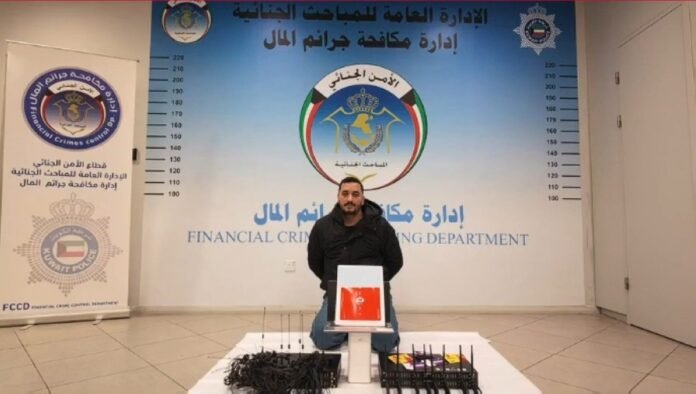
Kuwait’s Interior Ministry says police arrested a suspect linked to a cross-border fraud network targeting people across Gulf countries. Investigators say the group used fake advertisements and calls from local numbers to deceive victims. Kuwait coordinated the operation with United Arab Emirates security authorities and exchanged information.
Police seized two devices designed to operate several SIM cards at once. They also collected 70 SIM cards from Kuwaiti telecommunications companies and five cards from the UAE. Authorities say the equipment helped the network place calls and send messages using local numbers.
Investigators believe the network operated from outside Kuwait. By using local telephone numbers, its members could make communications appear familiar to recipients. As a result, victims might believe they were dealing with trusted organisations or contacts in their own countries.
The ministry did not identify the suspect or specify the alleged role in the network. It also did not describe the fake advertisements or explain how victims transferred money. Authorities have not said whether additional arrests may follow.
The case comes as Kuwait reports thousands of suspected fraud and scam complaints this year. The ministry said its Aman operations room received 3,394 reports involving a combined KD2 million. Those figures cover reports of similar operations, rather than losses attributed solely to this arrest.
Authorities recovered KD170,000 across 682 cases, according to the ministry. Meanwhile, they froze another KD1.83 million in 2,712 cases referred to the Public Prosecution. The figures indicate that officials handled the funds through separate recovery and freezing measures.
The ministry’s announcement did not say how many victims the arrested network allegedly targeted. Nor did it clarify whether the seized SIM cards connect directly to all 3,394 reports. The broader figures describe fraud reports received during the year.
Cooperation between Kuwait and the UAE formed part of the operation. Information sharing helped security authorities coordinate across borders, where investigators say the network operated. The inquiry now concerns the suspect, the seized communications equipment and the alleged use of local numbers.
Officials have urged the public to remain cautious when advertisements or unsolicited calls request money or personal details. However, the ministry did not provide specific prevention instructions in its statement. The cross-border fraud investigation continues as prosecutors review referred cases and authorities examine the seized items.