
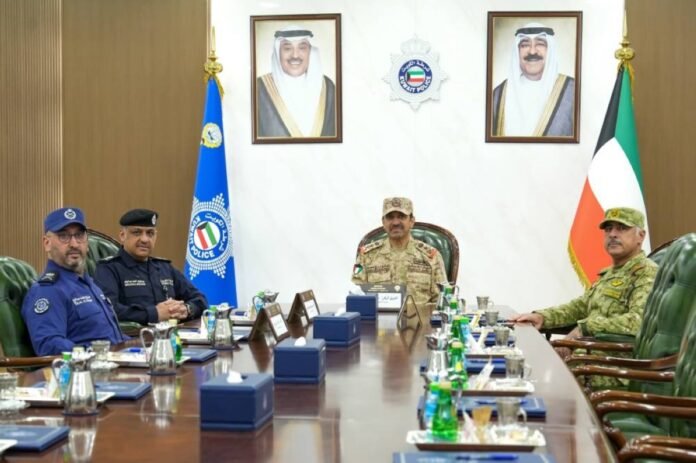
Security readiness took centre stage as Kuwait’s military and security leaders met to review coordination amid regional developments. The senior officials discussed ways to strengthen cooperation and ensure institutions can respond effectively to emerging challenges.
The meeting took place on Sunday at the Ministry of Interior. It brought together senior representatives from Kuwait’s armed forces, Interior Ministry, National Guard and Fire Force.
Army Chief of General Staff Lieutenant General Khaled Al-Shuraian attended alongside Interior Ministry Undersecretary Major General Abdulwahab Al-Waheeb. National Guard Undersecretary Lieutenant General Hamad Al-Burjas also joined the discussions.
Kuwait Fire Force Chief Major General Talal Al-Roumi attended with several other security officials. The Ministry of Interior outlined the meeting’s main discussions in a statement.
Participants reviewed the regional situation and considered its implications for Kuwait’s security institutions. They emphasised the importance of maintaining close communication between the country’s military and civilian security agencies.
In particular, officials highlighted information-sharing as an essential part of effective coordination. They agreed that stronger communication channels would help institutions respond quickly when circumstances change.
The discussions also focused on bringing different agencies’ efforts together more efficiently. By improving cooperation, officials aim to ensure that each institution can carry out its responsibilities without unnecessary delays.
Furthermore, participants considered how joint operations could better address the demands of the current period. They stressed that effective coordination requires agencies to understand their respective responsibilities and work towards shared objectives.
The meeting also examined the importance of maintaining essential services during challenging circumstances. Officials highlighted the need for institutions to continue performing their duties efficiently, regardless of external developments.
Another major focus involved preventive planning and proactive readiness. Rather than waiting for situations to escalate, security institutions must maintain the coordination needed to address potential developments promptly.
The officials also discussed strengthening the ability of military and security bodies to fulfil their national responsibilities. Their discussions reflected the importance of cooperation across institutions with different but connected roles.
At the conclusion, participants reaffirmed their commitment to improving coordination and strengthening preparedness. They underlined the importance of protecting Kuwait’s security, stability and the wellbeing of its population.
The meeting brought together the country’s principal military and security institutions around shared priorities. Security readiness, information exchange and coordinated action remained central themes throughout the discussions.
The officials concluded that continued cooperation would support their institutions’ ability to respond to regional developments. They also stressed that protecting citizens and residents requires consistent preparation and effective communication.
