
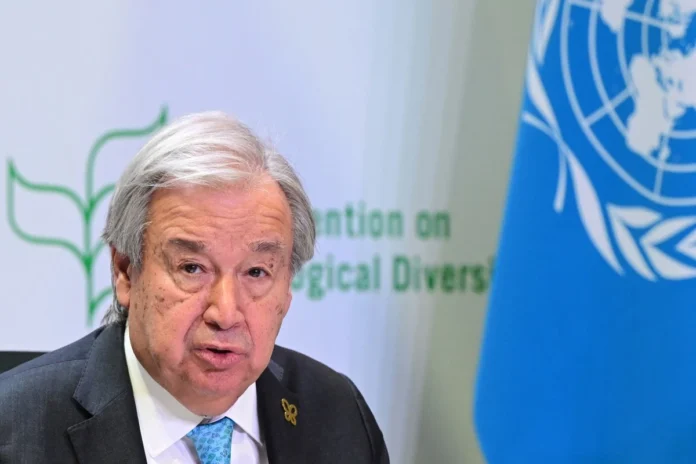
United Nations Secretary-General Antonio Guterres has warned that Climate Extremes are becoming the world’s new reality. Speaking ahead of discussions at the COP31 climate conference in Antalya, Türkiye, he urged governments to take stronger action against global warming.
Guterres said an exceptionally powerful El Niño is adding pressure to an already warming planet. He called on world leaders to accelerate emissions reductions and take climate commitments more seriously.
He also urged governments to speed up a fair transition away from fossil fuels. Furthermore, he stressed the importance of providing vulnerable countries with financial assistance and stronger protection against climate-related risks.
His warning coincided with the release of a report from the World Meteorological Organization. The report highlighted continued exceptional temperatures, shrinking ice reserves and rising sea levels during 2026.
According to the agency, each of the past 12 years ranks among the 12 hottest years recorded. Moreover, current observations suggest that 2026 could become one of the warmest years ever measured.
WMO Secretary-General Celeste Saulo described the latest climate measurements as extraordinary. She warned that the unusually strong El Niño could intensify heat and extreme weather conditions into 2027.
Saulo also cautioned that another record-breaking year could follow. Consequently, governments and communities must prepare for further temperature increases and potentially more severe weather events.
The WMO reported that global average surface temperatures between January and September reached approximately 1.47 degrees Celsius above pre-industrial levels. An exceptionally strong El Niño could push temperatures higher before the year ends.
The agency expects this event to become the strongest El Niño since at least 1950. During this natural climate phenomenon, warmer ocean waters release additional heat into the atmosphere.
Saulo explained that ocean temperatures have already reached unprecedented levels. The WMO also expects tropical Pacific sea surface temperatures to rise substantially above their usual averages.
The agency monitors El Niño when tropical Pacific temperatures reach at least half a degree above average. However, forecasts suggest temperatures could rise considerably further between November and January.
Preliminary assessments place 2026 among the four hottest years recorded. WMO climate information chief John Kennedy said final figures could potentially place it even closer to the top.
Meanwhile, the agency highlighted several other indicators of environmental change. Global sea levels have reached record heights, freshwater resources are declining and glaciers continue losing ice.
The report also illustrated the scale of glacier losses during 2025. Annual ice mass reductions equalled enough water to fill five Olympic-sized swimming pools every second.
Saulo warned that human-driven warming and El Niño could combine to intensify dangerous weather. She identified heatwaves, tropical cyclones and heavy rainstorms among the growing concerns.
Despite these warnings, the WMO identified progress in international disaster preparedness. The number of countries with essential multi-hazard early warning systems increased from 55 in 2015 to 136 last year.
However, the agency stressed that governments must continue investing in these systems. Reliable observations, stronger data collection and accurate forecasting remain essential for effective warnings.
The Climate Extremes warning therefore places renewed pressure on governments attending COP31. Leaders face growing demands to reduce emissions, support vulnerable communities and strengthen preparations for future climate risks.
