
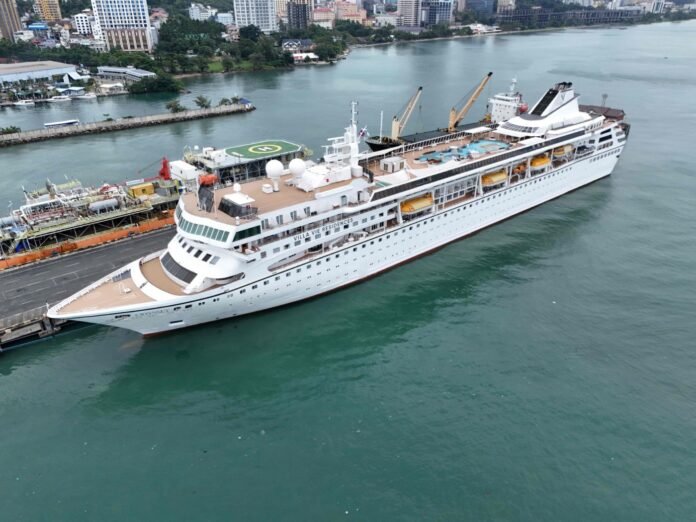
Around 200 passengers have been forced to leave a residential cruise ship in Cambodia after soaring fuel costs linked to the Iran war pushed its operator to suspend operations. The cruise shutdown has disrupted the lives of residents who invested heavily in a permanent home at sea.
Villa Vie Residences announced on Tuesday that it had suspended operations in Cambodia because of extraordinary increases in fuel expenses. The company operates the Villa Vie Odyssey, a vessel designed for travellers seeking an extended journey around the world.
The ship departed Belfast in October 2024, beginning an ambitious continuous voyage across international waters. However, its business model has now faced mounting financial pressure as fuel expenses climb across parts of Asia.
During a scheduled stop at Sihanoukville, a Cambodian port, passengers received instructions to leave the vessel within hours. Consequently, residents had little time to organise alternative accommodation or make arrangements for their belongings.
The sudden departure created particular difficulties for retirees and remote workers who had structured their lives around the ship. Some passengers had sold personal possessions to finance their new lifestyle, while others paid substantial sums for permanent cabins.
According to the reported figures, certain residents invested as much as $440,000 for their onboard accommodation. Therefore, the suspension has raised immediate concerns about their living arrangements and the practical consequences of the operator’s financial difficulties.
Fuel costs have become a central challenge for the company. Villa Vie Residences said monthly fuel expenses per cabin previously averaged around $1,800. However, those costs reportedly climbed to between $6,000 and $8,000 in some Asian locations.
This increase represents a substantial change in operating expenses, placing greater pressure on the company’s financial model. As a result, the cruise shutdown has interrupted the residential experience that passengers expected when they committed to long-term life aboard the vessel.
The situation also highlights the financial risks associated with residential cruising, where customers depend on an operator to maintain essential services. Unlike conventional holidaymakers, permanent residents may need to arrange housing, transport and other necessities when operations stop unexpectedly.
For affected passengers, the immediate priority is finding suitable accommodation after leaving the ship. However, the available information does not establish how long the suspension will last or when the company might resume operations.
The announcement also leaves questions about the longer-term arrangements for passengers who purchased expensive cabins. Further details about refunds, compensation or alternative accommodation were not included in the reported announcement.
For now, the cruise shutdown marks a significant disruption to a voyage that promised continuous travel and life at sea. The company’s next steps will be important for residents seeking clarity about their accommodation and future travel plans.
