
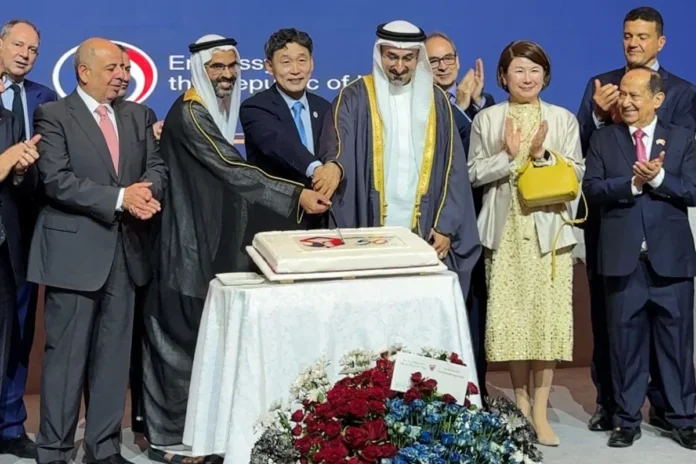
Bahrain and Korea are seeking stronger cooperation in artificial intelligence, aviation and energy as they mark 50 years of diplomatic relations. Ambassador Choi Byung-sun outlined opportunities for closer ties during a reception celebrating Korea’s National Day and the anniversary.
The Embassy of the Republic of Korea hosted the event on Monday at the Crowne Plaza Hotel. Bahrain’s Minister of Industry and Commerce, Abdulla Adel Fakhro, served as patron. Senior officials, diplomats and business leaders also attended the gathering.
Among the guests were the Director General of Bilateral Relations at Bahrain’s Ministry of Foreign Affairs and the First Deputy Chairman of the Shura Council. Their attendance highlighted the importance both countries place on continued diplomatic and economic engagement.
During his address, Choi reflected on historical connections that existed long before the two countries established formal diplomatic relations. He said merchants had carried Korea’s name to the Western world around a thousand years ago. This history, he explained, provides a foundation for the countries’ modern partnership.
The ambassador also highlighted cultural similarities rooted in their maritime traditions. Bahrain’s pearl divers and Korea’s female divers from Jeju Island represent important parts of their respective heritage. Both traditions have received recognition as UNESCO Intangible Cultural Heritage, offering a shared point of cultural connection.
Choi also pointed to the value of peace and regional stability. He opened his remarks with the Arabic greeting “Assalamu alaykum,” reflecting a message of peace. He connected this sentiment with the importance of stability for both countries.
The two nations established diplomatic relations in 1976, although economic cooperation began earlier. Choi highlighted 1975 as an important year, when Korean companies completed the dry dock at the Arab Shipbuilding and Repair Yard in Bahrain.
Over the following decades, Korean companies contributed to several major Bahraini projects. Their work included government buildings, the national museum and desalination infrastructure. These projects helped establish a practical foundation for cooperation beyond diplomacy.
Looking ahead, the ambassador identified several sectors with potential for further collaboration. These include artificial intelligence, aviation, automobiles, atomic energy, defence and smart technologies. In particular, emerging technologies and sustainable development could create new opportunities for both countries.
Choi said Bahrain and Korea wanted to extend their partnership into new areas. He also emphasised innovation and stronger people-to-people exchanges. Such efforts could support closer relationships between businesses, institutions and communities.
The reception also celebrated the anniversary through cultural activities. Organisers presented a specially produced video documenting five decades of bilateral relations. Guests also took part in a traditional cake-cutting ceremony and enjoyed showcases of Korean heritage.
The event included a Korean-speaking student who served as master of ceremonies. An aspiring pilot also attended, prompting the ambassador to express hope for a future direct flight between Manama and Seoul.
As Bahrain and Korea enter the next chapter of their relationship, both countries have opportunities to build on their established ties. Greater cooperation across technology, transport and energy could strengthen economic links. Continued cultural exchanges could also deepen understanding between their people.
The 50th anniversary therefore offers more than an occasion to reflect on past achievements. It provides an opportunity for both nations to identify shared priorities and pursue practical cooperation in emerging sectors.
