
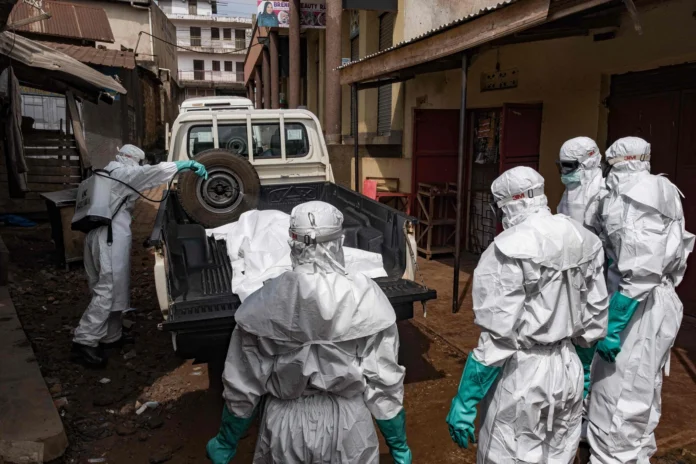
The Ebola outbreak in Congo has spread to four other countries, raising concerns about further international transmission. Nigeria became the latest affected country on Tuesday, joining Uganda, Kenya, and France among locations reporting cases. The outbreak began in eastern Democratic Republic of Congo in mid-May and has since crossed several borders.
Health officials have linked the outbreak to the Bundibugyo virus, a rare Ebola strain without an approved vaccine or specific treatment. In Congo, authorities have reported approximately 9,500 infections and at least 4,600 deaths. The World Health Organization has described the outbreak as the fastest-growing Ebola outbreak recorded, with cases reaching eastern, central, and western Africa.
However, delayed detection and gaps in disease surveillance have complicated efforts to contain the virus. Some patients received diagnoses only after developing symptoms or traveling across borders. Consequently, health authorities continue monitoring contacts and strengthening responses in affected communities.
Nigeria confirmed its first case in the capital, Abuja, involving a woman who had recently returned from Uganda. She developed symptoms on October 7 and entered a private hospital four days later. Medical teams subsequently diagnosed her with Ebola, although officials have not confirmed her exact arrival date.
Health Minister Muhammad Pate said authorities had identified 44 people who may have contacted the patient. Officials are tracing those individuals and monitoring potential exposure to prevent further transmission. Meanwhile, the case has prompted renewed attention to cross-border travel and early detection.
Uganda, which initially reported infections linked to people arriving from Congo, has brought its outbreak under control. Authorities confirmed 20 cases, including 15 involving Congolese patients who crossed the border seeking treatment. Eighteen people recovered, while two died during the outbreak.
The World Health Organization declared Uganda Ebola-free on August 27, following 42 days without new cases. Health teams identified and monitored more than 800 contacts throughout the response. Moreover, officials confirmed on Tuesday that Uganda had no active infections.
Kenya continues managing a separate cluster following its first reported case on October 6. The patient, a man who traveled from Congo through Uganda, reached Nairobi on October 3. He tested positive two days later and died that same day.
Since then, Kenya has recorded nine cases, including four relatives of the first patient and four healthcare workers. Authorities have identified 135 contacts and placed 134 under quarantine. Nevertheless, the Health Ministry reported no evidence of transmission beyond the first patient’s known contacts.
France remains the only country outside Africa to report an infection linked to this outbreak. In June, a doctor returning from a humanitarian mission in Congo tested positive. French authorities transferred the patient to a specialist treatment facility, and the doctor recovered before leaving hospital on July 4.
The Ebola outbreak has highlighted the importance of coordinated surveillance, rapid diagnosis, and effective contact tracing. Although several countries have contained their initial cases, Nigeria’s new infection shows that risks remain. Therefore, health agencies continue urging authorities to strengthen border monitoring and respond quickly to suspected infections.
The Bundibugyo strain presents particular challenges because no approved vaccine or specific drug currently targets it. Early identification, isolation, protective equipment, and careful monitoring remain central to limiting transmission. Ultimately, the effectiveness of these measures will influence whether health officials can prevent additional international spread.
