
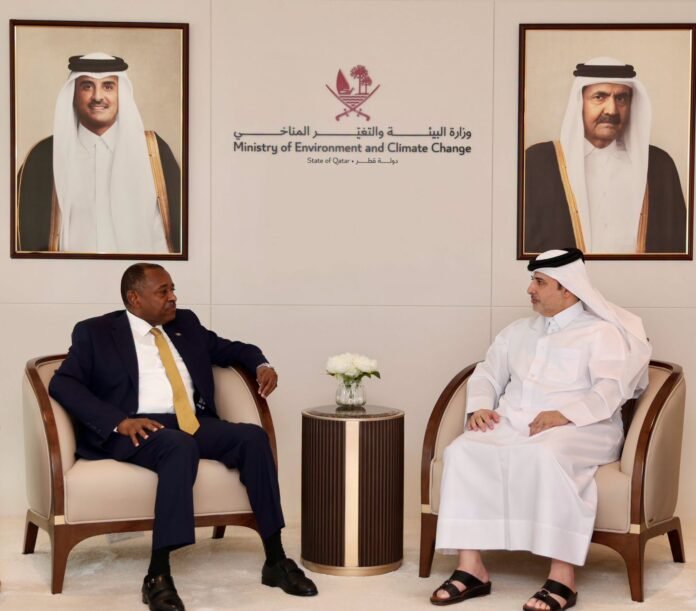
Climate Change Cooperation remained the central focus when Qatari environmental leaders welcomed visiting international officials recently. Official discussions in Doha brought together key government representatives to explore environmental sustainability initiatives. Furthermore, bilateral talks emphasized strengthening institutional ties across multiple ecological sectors. Consequently, participating delegates reviewed collaborative strategies designed to address pressing regional environmental challenges.
Meanwhile, Qatari environment ministry leadership hosted their visiting Sudanese counterpart during a formal diplomatic engagement. Both ministers evaluated numerous opportunities for joint technological advancement and ecological preservation projects. Additionally, participants addressed broader sustainability measures aimed at reducing long term carbon emissions across both nations. Therefore, government delegations outlined practical frameworks for sharing technical expertise and environmental research data.
Furthermore, official meetings highlighted the vital importance of multilateral partnerships in tackling modern ecological threats. Environmental experts emphasize that shared resource management accelerates progress toward sustainable development goals worldwide. Moreover, regional authorities continue prioritizing bilateral agreements to protect fragile ecosystems and natural habitats. Consequently, diplomatic channels remain active as both nations pursue shared environmental protection objectives.
Additionally, ongoing diplomatic engagements reinforce mutual commitments toward advancing Climate Change Cooperation across international platforms. Both ministries intend to execute joint training workshops and capacity building initiatives soon. Furthermore, administrative teams will monitor project implementation stages to ensure maximum efficiency across all agreed programs. Therefore, regional observers expect these bilateral discussions to yield tangible ecological benefits in coming months.
In conclusion, high level diplomatic meetings demonstrate persistent dedication toward regional environmental preservation and sustainability. Furthermore, strategic partnerships enable developing nations to implement effective climate mitigation policies rapidly. Moreover, collaborative efforts provide essential frameworks for tackling shared ecological vulnerabilities across borders, international cooperation remains indispensable for achieving long term global environmental stability.
