
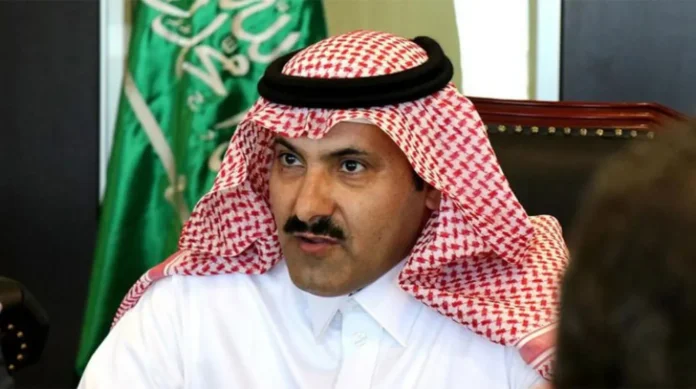
Saudi envoy Mohammed Al-Jaber accused the Houthis of exploiting Yemen’s crises to finance war and obstruct peace. On Tuesday, 20 October, he alleged that the group diverts public revenues while neglecting essential services and public-sector salaries.
Al-Jaber, Saudi Arabia’s ambassador to Yemen, said the Houthis redirect taxes, customs duties, and telecommunications income toward military activities. He argued that these practices deepen hardship while supporting attacks against civilians, Saudi Arabia, and commercial vessels.
The ambassador also criticized Houthi operations in Taiz, where fighting has intensified against government-aligned forces. He accused the group of restricting civilian movement and blocking access to essential supplies, including food and medicine.
“Yemen does not belong to the Houthis, and Taiz will not remain hostage to their agenda,” Al-Jaber said. His remarks highlighted his opposition to the group’s control and military campaign.
Al-Jaber also discussed the Houthis’ alleged use of telecommunications networks to generate revenue. A 2024 United Nations expert report documented the group’s use of millions of text messages to raise funds. According to the report, these efforts supported drone and coastal defence operations.
The report estimated that Houthi authorities collected around 994 billion Yemeni riyals in fuel import customs duties. That amount equalled approximately $4.2 billion between April 2022 and June 2024. Including additional charges and profit margins, estimated fuel-sector revenue reached 1.34 trillion Yemeni riyals.
Furthermore, Al-Jaber cited an estimate that the group earns $2 billion annually from smuggled oil. He accused the Houthis of directing these funds toward military operations instead of public services and infrastructure.
The ambassador said these practices undermine Yemen’s recovery and worsen its economic challenges. He also accused the group of avoiding commitments under Yemen’s National Dialogue and a United Nations-backed peace roadmap.
Meanwhile, Al-Jaber rejected Houthi claims that a blockade prevents goods from reaching Yemen. He said ports in Hodeidah continue receiving food, medicine, fuel, and other commercial shipments.
The ambassador also highlighted disruptions involving Yemenia Airways and Sanaa International Airport. He cited the seizure of four aircraft in June 2024 and subsequent restrictions on flights. He linked the airport’s destruction and the loss of all four aircraft in May 2025 to Israeli airstrikes.
Renewed fighting has further worsened Yemen’s humanitarian emergency. In Taiz, disrupted supply routes have increased food and fuel prices. The crisis has also forced thousands of residents to flee their homes.
Local authorities reported that a missile strike hit a residential neighbourhood on Tuesday. The attack killed two teenage girls and injured six other people. Meanwhile, United Nations human rights chief Volker Türk warned that the siege endangered civilians. He called for immediate humanitarian access to the affected areas.
Al-Jaber said Saudi Arabia would continue protecting its territory, citizens, and vessels. He also reaffirmed support for Yemen’s internationally recognized government and efforts to restore stability.
The allegations highlight continuing disputes over the Houthis’ use of public resources. Yemen Revenue Diversion remains central to Al-Jaber’s criticism of the group’s military financing. He said Saudi Arabia would continue supporting peace and Yemen’s path toward recovery.
