
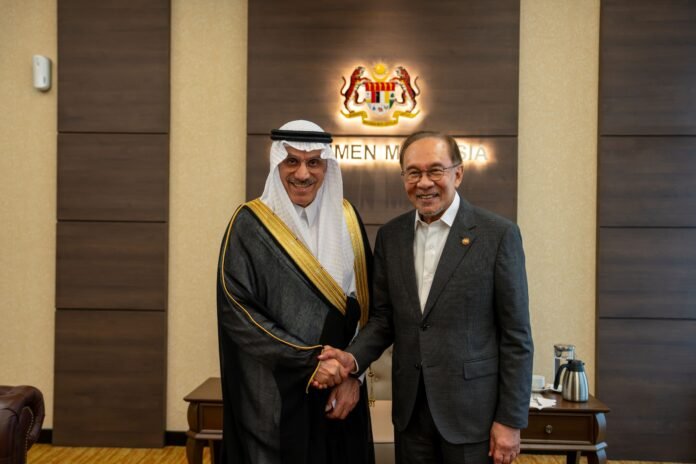
Malaysian Prime Minister Anwar Ibrahim met Islamic Development Bank Group Chairman Muhammad Al Jasser in Kuala Lumpur. The Malaysia-IsDB Partnership was central to their discussions, which focused on entrepreneurship, job creation, and stronger private-sector development. The meeting also highlighted their longstanding relationship and shared commitment to sustainable economic progress.
Anwar, who also serves as Malaysia’s finance minister, welcomed Al Jasser for talks on common development priorities. Both sides explored ways to expand opportunities for small and medium-sized enterprises across their areas of cooperation. These businesses play an important role in supporting entrepreneurs, creating employment, and strengthening local economies.
Furthermore, the discussions considered how greater private-sector participation could encourage more inclusive economic growth. Small and medium-sized enterprises often create opportunities for new businesses and support employment across different communities. Therefore, improving access to business support and financing can help entrepreneurs expand operations and explore new markets.
The meeting also reflected a broader interest in strengthening development ties among countries of the Global South. Both sides reaffirmed their commitment to closer collaboration and initiatives that support long-term economic progress. In addition, they highlighted the importance of innovative financing in advancing shared development objectives.
Innovative financing can help institutions and governments explore different ways to fund development priorities. Such approaches may support business expansion, infrastructure, employment initiatives, and other economic programmes. However, officials did not announce specific financing mechanisms or confirm a new funding agreement during the meeting.
The Islamic Development Bank Group works with member countries on economic and social development priorities. Its engagement with Malaysia provides a platform for discussing investment, entrepreneurship, and broader development initiatives. Consequently, continued dialogue may help identify areas where shared priorities can lead to practical projects.
For Malaysia, supporting small businesses and expanding private-sector opportunities can contribute to employment and wider economic participation. Meanwhile, cooperation with development institutions can connect national priorities with international development efforts. Both sides expressed interest in maintaining their collaboration and exploring further opportunities.
The Malaysia-IsDB Partnership also reflects a shared interest in mobilising resources for sustainable development. Stronger institutional ties can provide a foundation for discussions on financing and private-sector growth. Nevertheless, any future outcomes will depend on the programmes and initiatives both sides develop.
The meeting concluded with a renewed commitment to deepen cooperation among Global South countries and strengthen bilateral development ties. Although officials did not disclose specific projects or implementation timelines, their discussions underscored shared ambitions. Further progress will depend on translating these priorities into practical initiatives that support businesses, employment, and sustainable growth.
