
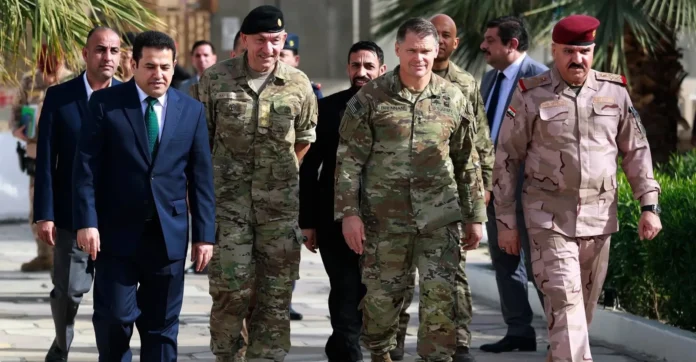
Iraq has reached a major security transition as the international coalition mission ends while bilateral cooperation continues. National Security Adviser Qasim Al-Araji said the change would shift relations toward deeper cooperation. He explained that ending the coalition’s mission and foreign troop presence does not mean ending security ties.
Instead, Iraq will develop bilateral relationships with coalition members based on sovereignty and mutual interests. The Security Partnership will focus on intelligence cooperation, information exchange, security coordination and professional capacity building. Al-Araji said these areas would support Iraq’s security while strengthening the country’s national sovereignty.
He also credited Iraqi security forces with defeating ISIS after years of military operations across the country. At the same time, he recognized the assistance provided by coalition members and other international partners. His comments highlighted both Iraq’s security achievements and the contribution of international support.
The transition follows an agreement Baghdad and Washington reached in September 2024. That agreement established a two-stage process for ending the coalition’s military mission and changing the nature of cooperation. The first stage concluded in September 2025 after coalition forces left several major locations in Iraq.
However, personnel remained in the Kurdistan Region during the following stage to support operations against ISIS in Syria. That second stage reached its scheduled conclusion on September 30, completing the planned transition. Iraq now moves toward direct security relationships with individual coalition countries instead of the previous multinational framework.
US officials have also described the change as a transition rather than an end to cooperation. Washington and Baghdad have continued discussing a longer-term bilateral relationship covering security and other areas. The Security Partnership therefore represents a change in structure rather than a complete break between Iraq and international partners.
Future cooperation can continue through direct agreements, intelligence coordination and exchanges between security institutions. Meanwhile, Iraq can increasingly manage security relationships with individual countries according to its national priorities. This approach marks a shift away from the previous multinational military framework.
The international coalition formed in 2014 after ISIS captured large areas of Iraq and Syria. Its initial mission focused heavily on military operations against the extremist organization and supporting Iraqi forces. As Iraqi forces regained territory, the coalition gradually changed its role inside Iraq.
Training, advising, intelligence assistance and other forms of support became increasingly important as Iraqi forces assumed greater responsibility. Iraq has since sought to strengthen its own security institutions and manage national security responsibilities independently. Government officials have repeatedly linked the coalition’s departure with greater sovereignty and stronger state authority.
The transition also carries symbolic importance for Baghdad as officials mark the completion of the coalition mission. The government has designated September 30 as an important milestone in Iraq’s security relationship with international partners. Officials are also preparing for a new phase beginning October 1.
Government messaging presents that phase as an opportunity to reinforce sovereignty while maintaining cooperation based on shared security interests. The Security Partnership could consequently shape Iraq’s relations with the United States and other former coalition members. Rather than relying on one multinational military framework, Baghdad will increasingly manage those relationships individually.
Al-Araji emphasized that Iraq values the assistance provided during the campaign against ISIS. However, he also stressed the sacrifices made by Iraqi forces and their central role in defeating the organization. His remarks placed Iraq’s own security forces at the center of the country’s next security phase.
The transition comes as Iraq continues developing its security capabilities and strengthening its state institutions. Meanwhile, international partners remain involved through diplomatic, intelligence and security channels under bilateral arrangements. The end of the coalition mission therefore marks a significant change in Iraq’s security framework.
However, officials have made clear that cooperation with international partners will continue through a different structure. Iraq’s next phase will focus more heavily on bilateral relationships, intelligence coordination and security cooperation. The shift allows Baghdad to maintain international partnerships while emphasizing national sovereignty and independent security decision-making.
