
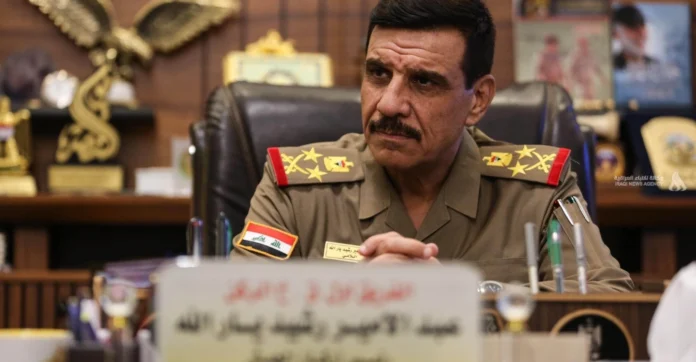
Peshmerga unification has emerged as a significant development for Iraq’s national security and military coordination. Iraq’s Army Chief of Staff, Lieutenant General Abdul Amir Rashid Yarallah, welcomed the move on Tuesday. He described the Peshmerga and Iraqi armed forces as important components of Iraq’s wider defense system.
The Kurdistan Region formally announced the completion of the unification process during a ceremony in Erbil. The event took place at the Kurdistan Region Presidency headquarters on September 21. Senior Kurdish and Iraqi officials attended the ceremony alongside Peshmerga commanders and international representatives.
Yarallah said the development represents an important step toward coordinating Iraq’s military institutions more closely. He also highlighted the importance of maintaining cooperation between the Iraqi Army and Peshmerga forces. Both forces previously worked together during military operations against ISIS, particularly during the group’s territorial expansion across Iraq.
According to the Kurdistan Regional Government, the reorganization places the Peshmerga under a unified structure through the Ministry of Peshmerga Affairs. The process brings previously separate formations into a common command-and-control framework. Officials say the structure covers operations, training, leadership, communications, accounting, and other military functions.
The reform follows several years of efforts to reorganize the Peshmerga forces. The Kurdistan Regional Government says the process involved cooperation with the United States and international coalition partners. It also described the latest development as the first stage of a longer military reform process.
Furthermore, Kurdish officials have outlined additional plans to develop the force’s military capabilities. Those plans include improving training standards, strengthening organizational structures, and expanding access to advanced military equipment. Officials have also highlighted air defense capabilities as part of the next stage.
Yarallah credited Kurdish political and military leaders for advancing the process and strengthening the Peshmerga’s capabilities. He also pointed toward deeper coordination between the Kurdish forces and Iraq’s federal military institutions. Such coordination could support greater cooperation across Iraq’s broader national defense framework.
Meanwhile, Kurdish officials have emphasized the constitutional position of the Peshmerga within Iraq’s defense system. They have also called for stronger coordination between the Peshmerga and Iraqi Army. In addition, Kurdish authorities have urged Baghdad to protect the force’s constitutional and financial rights.
The unification also addresses a longstanding organizational division within the Peshmerga. The Kurdistan Region previously maintained separate forces associated with its two major political parties. The latest restructuring seeks to place those formations within the Ministry of Peshmerga Affairs.
However, questions remain about how fully the reform will translate into operational unity. Some political figures have publicly questioned whether the changes have eliminated longstanding differences in command structures. Those claims remain contested, while regional authorities maintain that the formal unification has been completed.
The development therefore represents both an institutional change and the beginning of further military reforms. Kurdish authorities say the next phase will focus on professionalism, discipline, training, and stronger command structures. At the federal level, Iraqi officials have welcomed the move as supporting national security and institutional coordination.
Overall, Peshmerga unification marks a new stage in relations between Iraq’s federal security institutions and Kurdistan’s military forces. Further cooperation between the two sides will determine how the new structure operates within Iraq’s defense system. The process could also shape future efforts to strengthen coordination across the country’s security institutions.
