
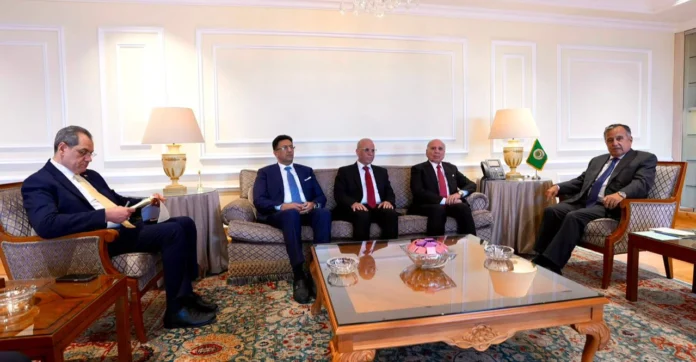
Regional dialogue has emerged as Baghdad’s preferred approach to limiting tensions and preventing further escalation across the region. Iraqi Foreign Minister Fuad Hussein called on parties involved in regional conflicts to pursue negotiations. He made the appeal during meetings in Cairo focused on regional security and political developments. Hussein stressed the importance of communication as tensions continue to affect stability across neighbouring countries.
The Iraqi foreign minister met Arab League Secretary-General Nabil Fahmy in Cairo on Monday. Their meeting took place alongside the 166th regular session of the Arab League Council at ministerial level. The discussions covered cooperation within the Arab League and developments affecting the wider Middle East. Both officials also considered how regional institutions could contribute to reducing tensions.
Hussein said the Arab League could help encourage communication between parties facing political or security disputes. He highlighted the organisation’s regional contacts and ability to support efforts aimed at facilitating dialogue. According to the Iraqi minister, stronger diplomatic engagement could create opportunities for reducing tensions. Furthermore, sustained communication could help prevent disputes from developing into broader regional confrontations.
The discussions also examined tensions between Tehran and Washington and their possible consequences. Iraq remains particularly concerned about developments that could affect security across the region. Consequently, Baghdad continues to emphasise diplomatic engagement as a way of limiting the risks associated with escalation. Iraqi officials have repeatedly stressed the importance of protecting the country from the effects of wider regional conflicts.
The meeting also addressed possible disruptions to navigation through the Strait of Hormuz. The waterway remains highly significant for international trade and global energy transportation. Therefore, any disruption could create consequences that extend beyond the countries directly involved in regional tensions. The officials considered the potential economic implications for Arab states, including countries that depend heavily on stable maritime trade routes.
Iraq faces particular concerns because of the strategic importance of the Strait of Hormuz. Disruptions could affect energy markets, commercial shipping, and regional economic activity. In addition, changes to maritime transportation could create wider pressures for countries connected to international trade. Baghdad therefore has a direct interest in maintaining stability around major regional waterways.
Hussein’s call for regional dialogue also reflects Iraq’s position as a country seeking to avoid deeper regional confrontation. Baghdad has economic, political, and security interests connected to developments involving neighbouring states. At the same time, Iraq maintains relationships with several regional and international actors. This position gives Iraqi diplomacy an interest in encouraging communication rather than allowing tensions to intensify.
The Arab League meeting provided a broader setting for discussing these challenges among Arab governments. Ministers attending the session can exchange views on developments affecting collective regional interests. Moreover, cooperation through established diplomatic channels can help governments coordinate their responses to emerging challenges. Such engagement becomes especially important when security developments could produce economic consequences across several countries.
The potential impact on the Strait of Hormuz adds an important economic dimension to the discussions. Energy shipments and commercial vessels rely on secure maritime routes to reach international markets. Any prolonged uncertainty could consequently affect businesses, governments, and consumers across the region. For Iraq, maintaining predictable trade and energy routes remains particularly important to economic stability.
Hussein’s position places diplomacy at the centre of Iraq’s response to current regional tensions. Regional dialogue can provide governments with opportunities to communicate concerns before disagreements become more difficult to manage. Meanwhile, the Arab League can use its diplomatic relationships to encourage contacts between regional parties. Such efforts could support wider attempts to preserve security and stability.
Overall, Baghdad is urging continued negotiations as tensions between regional and international actors create growing concerns. Regional dialogue remains central to Iraq’s call for restraint, communication, and diplomatic engagement. The discussions in Cairo also highlighted the broader economic risks that could emerge from instability around critical maritime routes.
