
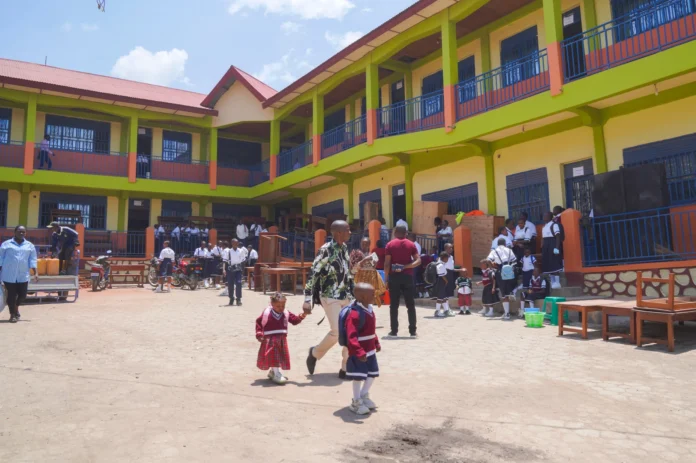
Afghan Girls’ Education has found a new home in Rwanda, where SOLA continues teaching students displaced by Afghanistan’s political upheaval.
The School of Leadership, Afghanistan opened its permanent Rwanda campus this month after relocating from Kabul. However, security concerns have kept the campus location confidential to protect students and staff.
SOLA founder Shabana Basij-Rasikh described the campus as a permanent home for Afghan girls. Meanwhile, the school continues building opportunities for students who lost access to education at home.
Following the Taliban’s return to power in 2021, Basij-Rasikh, students, and faculty relocated to Rwanda. The Rwandan government invited the school, allowing roughly 100 graduates and faculty members to relocate.
All enrolled students also moved to Rwanda, and classes resumed just four days after their arrival. Initially, students attended lessons at a hotel while the organization prepared its permanent campus.
SOLA currently has 122 girls enrolled, according to Basij-Rasikh, who emphasized their determination to continue learning. Their experience contrasts sharply with conditions facing millions of girls inside Afghanistan.
United Nations figures have indicated that around 2.4 million Afghan girls remain excluded from secondary education. Since the Taliban takeover, restrictions have continued limiting educational opportunities for girls beyond sixth grade.
The Taliban has maintained that it intends to provide education under its interpretation of Islamic law. However, international organizations continue highlighting significant barriers preventing girls from accessing secondary and higher education.
Despite those restrictions, SOLA has expanded its mission beyond its physical campus through digital education. The organization launched School of Leadership, Afghanistan Extension, known as SOLAx, in 2024.
The online program provides lessons based on Afghanistan’s school curriculum for students from grades six through twelve. Students can access courses through WhatsApp using smartphones, allowing greater flexibility despite difficult circumstances.
Mati Amin, Basij-Rasikh’s husband and SOLAx co-founder, said the organization developed the platform around Afghanistan’s political and technological realities. Consequently, WhatsApp offered a practical option because many Afghan families already use it regularly.
Nevertheless, students face significant challenges when accessing online lessons. Many girls do not own smartphones, while others share devices with family members or experience unreliable internet connections.
Household responsibilities can also limit uninterrupted study time, making flexible learning especially important. Therefore, SOLAx allows students to continue their education according to their individual circumstances.
The platform has grown significantly since its launch and now serves about 41,000 students. Most participants live in Afghanistan, while students in 76 other countries also use the program.
SOLAx includes safety measures designed for students facing restrictions and potential risks. Students can quickly remove conversations and later restore their studies using a personal PIN code.
The program teaches younger students in Dari and Pashto, while older students generally study in English. Furthermore, SOLA stores student records digitally after Basij-Rasikh destroyed the organization’s Afghan records before leaving the country.
She feared those records could expose families who had supported their daughters’ education. As a result, protecting students and their families remains central to SOLA’s operations.
SOLA and SOLAx operate without charging students, relying instead on financial support from international donors. Supporters say Basij-Rasikh’s commitment has helped sustain educational opportunities despite major political and security challenges.
Philanthropist Melinda French Gates selected Basij-Rasikh in 2024 among 12 leaders receiving significant funding for organizations supporting women and girls. Basij-Rasikh directed that funding toward Afghan civil society groups, particularly organizations operating outside Afghanistan.
She has also stressed that SOLA cannot address Afghanistan’s enormous educational needs alone. Instead, she supports a broader network of organizations addressing different challenges affecting Afghan women and girls.
At the same time, Basij-Rasikh says organizations working from exile are preparing for eventual change. She believes girls educated abroad could eventually return and contribute to Afghanistan’s future leadership.
The Rwanda campus therefore represents more than a relocation for SOLA. It provides a stable educational environment while the organization continues supporting students through digital and international programs.
Afghan Girls’ Education remains central to SOLA’s mission as it expands opportunities beyond Afghanistan. Looking ahead, Basij-Rasikh wants the organization to remain sustainable beyond her own leadership.
She also wants Afghan families and girls worldwide to recognize that SOLA remains committed to their education. With its Rwanda campus and digital platform, the organization continues pursuing that mission despite ongoing uncertainty.
