
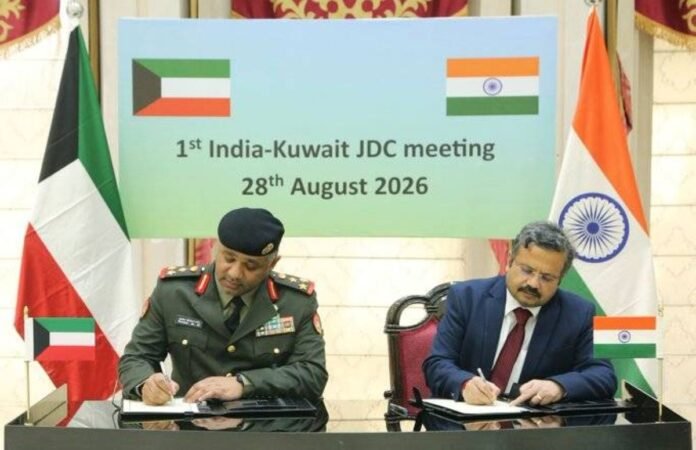
Kuwait and India officially convened the inaugural meeting of their joint defense committee in New Delhi to strengthen bilateral security relations. Furthermore, this landmark gathering operationalized strategic objectives established under the Memorandum of Understanding signed in December 2024. In addition, senior defense officials reviewed current cooperation models while identifying emerging opportunities across training, military medicine, and research programs.Meanwhile, military leadership from both partner nations reaffirmed commitments to establishing robust, long-term security architecture. Therefore, this operational integration marks a vital milestone in advancing comprehensive strategic ties between the two partner countries.
Consequently, the joint defense committee established framework guidelines for conducting shared exercises, professional exchanges, and technical research initiatives. Specifically, Indian Defense Ministry Secretary Amitabh Prasad co-chaired the strategic sessions alongside Kuwaiti delegation leader Brigadier General Raed Al-Sakran. Moreover, General Al-Sakran paid formal respects at the National War Memorial before conducting talks with defense manufacturing executives. Besides expanding military training programs, delegates evaluated joint development opportunities with Indian public sector defense companies. As a result, synchronized institutional planning directly enhances operational readiness for both armed forces across shared strategic interests.
Similarly, this joint defense committee reinforces historical ties established when formal diplomatic relations began back in 1962. For instance, growing defense collaboration reflects broader economic, political, and strategic alignment following Prime Minister Narendra Modi’s visit to Kuwait. Likewise, Kuwait values India’s technical expertise in specialized military training, trauma medicine, and defensive equipment production. Furthermore, regional experts anticipate recurring committee meetings will build deep familiarity and seamless interoperability between military leaderships. Eventually, strong institutional frameworks will transform historic trade ties into a modern defense partnership across the Indian Ocean region.
