
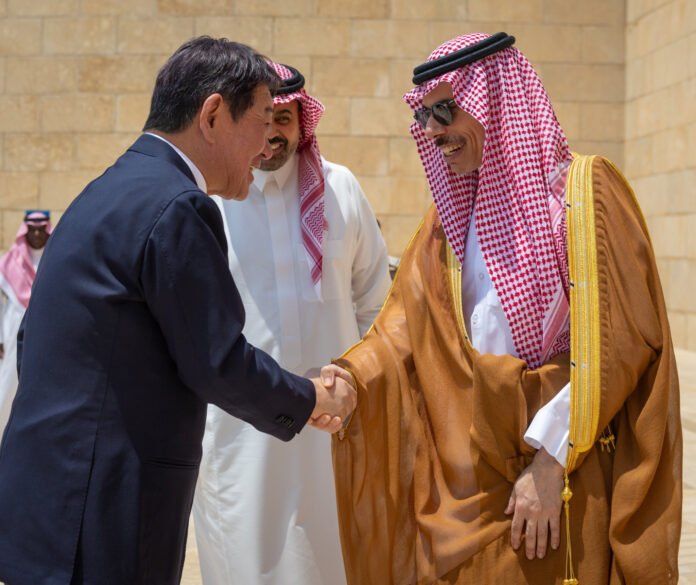
Japanese Foreign Minister Toshimitsu Motegi concluded strategic diplomatic talks in Riyadh focusing directly on Middle East security. The visiting diplomat met with Saudi Foreign Minister Prince Faisal bin Farhan to discuss navigation freedom across vital regional waterways. Official delegation spokesman Kitamura Toshihiro confirmed that both nations emphasized protecting international trade routes through the Strait of Hormuz. Consequently, cooperative diplomatic efforts aim to preserve long-term commercial stability and maritime safety throughout the broader region.
Foreign Minister Motegi also held official discussions with Presidential Leadership Council head Rashad Mohammed Al-Alimi regarding Yemen. Japanese officials strongly condemned ongoing maritime shipping attacks and urged regional partners to exercise diplomatic restraint. Furthermore, Tokyo affirmed continuous support for Yemen’s recognized government to help secure Bab Al-Mandeb Strait transit. Maintaining regional maritime stability directly protects international commerce and supports overall Middle East security across global trade lanes.
Bilateral negotiations additionally highlighted economic cooperation under the established joint Saudi-Japan Vision 2030 framework initiative. Both partners plan to expand economic collaboration beyond traditional crude oil supplies and automotive import markets. Specifically, technical teams focus on advanced seawater desalination projects using energy-efficient reverse osmosis membrane technologies. Therefore, joint environmental investments significantly reduce industrial carbon footprints while lowering overall operational production costs.
Artificial intelligence development represents another key emerging sector for technological collaboration between both countries. Representatives expressed strong optimism for expanding bilateral trade while strengthening diplomatic ties built over seven decades. Moreover, officials confirmed plans to accelerate technology transfers, clean energy projects, and mutual cultural exchange programs. Ultimately, practical bilateral initiatives continue to reinforce Middle East security while accelerating sustainable economic diversification.
