
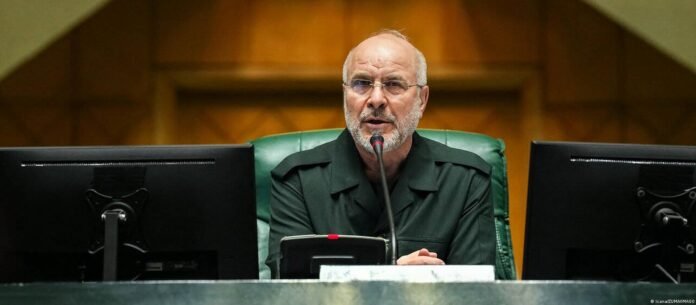
Iranian Parliament Speaker Mohammad Bagher Ghalibaf said Wednesday that Iraqi resistance groups hold growing regional influence. He made the remarks during a visit to Baghdad, where he met senior Iraqi officials. Ghalibaf described the Iraqi resistance as an important source of national strength. He also argued that its influence now extends beyond Iraq and Iran.
Ghalibaf made the comments near Baghdad International Airport, where a 2020 US drone strike killed Qassem Soleimani. The strike also killed Abu Mahdi al-Muhandis, then deputy head of Iraq’s Popular Mobilization Forces. Ghalibaf visited the location alongside Iraqi First Deputy Parliament Speaker Adnan Faihan. He used the occasion to discuss wider regional developments and relations between neighboring countries.
According to Ghalibaf, the region faces significant changes as a new political order begins taking shape. Therefore, he called for stronger cooperation between regional states without outside interference. He particularly emphasized deeper relations among countries with predominantly Muslim populations. Moreover, he highlighted economic cooperation as an important area for expanding regional ties.
Ghalibaf said Tehran remains prepared to strengthen economic cooperation with Baghdad across multiple sectors. He also described relations between Iraqi and Iranian populations as longstanding and deeply established. Furthermore, he pointed to geographic proximity and historical connections as foundations for continued bilateral engagement. The Iranian speaker said these longstanding ties could support broader cooperation between both countries.
Meanwhile, the Iranian delegation’s visit includes discussions covering political, security, and economic matters. Iraqi and Iranian officials are expected to address several issues affecting bilateral relations and regional stability. In particular, energy exports through the Strait of Hormuz represent an important issue. Iraq relies heavily on the strategic waterway to transport much of its crude production.
The discussions therefore come as uncertainty continues surrounding shipping through the Strait of Hormuz. Any prolonged disruption could create significant challenges for Iraq’s oil exports and government revenues. Consequently, securing alternative or reliable export routes has become an important concern for Baghdad. The issue also carries wider implications for regional energy markets and international oil supplies.
Another major topic involves the future status of Iraqi armed factions and their weapons. Baghdad has pursued efforts aimed at placing all weapons under exclusive state authority. However, several Iran-aligned factions maintain significant political, security, and organizational influence within Iraq. The discussions could therefore provide insight into Tehran’s position regarding Baghdad’s efforts.
The Iranian delegation is expected to communicate its government’s position on measures taken by Iraqi authorities. At the same time, officials may discuss ways to manage security concerns without worsening political tensions. These discussions could influence future relations between Baghdad, Tehran, and Iraq’s armed factions. Nevertheless, the precise outcomes of the meetings remain subject to further negotiations.
Ghalibaf’s comments place the Iraqi resistance at the center of broader regional discussions. However, Baghdad continues facing pressure to strengthen state institutions and consolidate control over armed groups. Meanwhile, economic cooperation remains another significant component of Iraq-Iran relations. As a result, the current talks combine security, political, and economic issues with wider regional implications.
