
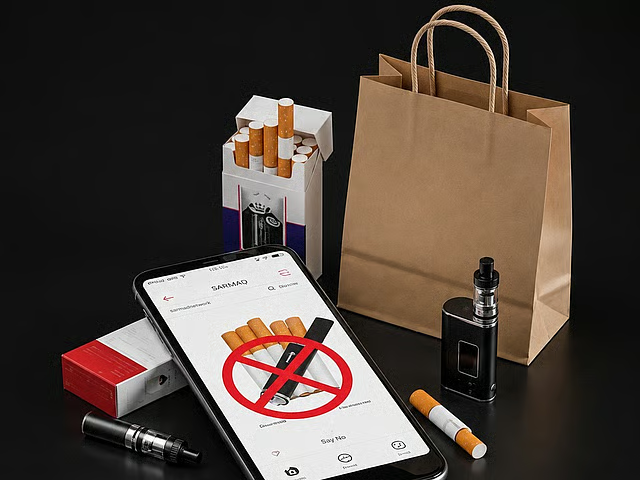
Kuwait tobacco rules will introduce sweeping restrictions on tobacco and nicotine products from January 2027. The measures raise the minimum purchase age to 21 and prohibit online sales and deliveries.
Health Minister Dr Ahmed Al Awadhi issued Ministerial Resolution No. 237 of 2026. The resolution covers tobacco, electronic cigarettes, heated tobacco and other nicotine-delivery products.
Kuwait will enforce the new framework from January 1, 2027. Officials designed the measures to strengthen public-health protections and limit access among young people.
New requirements cover importing, manufacturing, packaging, distribution, sales, advertising and product promotion. They also establish controls for products already available and future nicotine technologies.
Retailers must verify customers’ ages before completing sales or deliveries. Businesses can use civil identification or another officially approved method for verification.
Licensed outlets must display notices in Arabic and English. Notices must clearly state that businesses cannot sell or supply products to anyone under 21.
The rules define sales broadly. They cover conventional transactions, electronic purchases, deliveries, distribution, free samples, gifts and promotional offers.
Kuwait will also prohibit online sales and distribution through websites and mobile applications. Social media platforms and delivery services will also fall under the restrictions.
Self-service machines cannot sell regulated tobacco or nicotine products. Authorities will also restrict product displays that allow customers to access items without supervision.
Sales and displays will face restrictions across numerous public and private locations. These include nurseries, schools, universities, colleges and other educational institutions.
Healthcare facilities will also face restrictions on sales, displays and distribution. Government agencies, sports clubs, youth centres and health institutes will fall under the framework.
Authorities will additionally restrict sales at theatres, cinemas, exhibitions and entertainment events. Grocery shops, mobile carts and temporary kiosks will also face restrictions.
Kuwait will prohibit several nicotine products that lack proper registration. These include nicotine pouches and oral products that contain nicotine without medicinal registration.
Authorities will also restrict products with unknown origins or unapproved specifications. Products exceeding permitted nicotine, ingredient or emissions limits will also face prohibition.
Licensed pharmaceutical products approved by Kuwait’s Ministry of Health remain outside those restrictions. However, other nicotine products must satisfy regulatory requirements before entering the market.
Kuwait tobacco rules will also cover future nicotine-delivery technologies. Any new product containing or delivering nicotine can fall under the framework.
Products that have not received Ministry of Health approval cannot enter the market. This approach allows regulators to address emerging products without creating separate rules for each technology.
Authorities will also target packaging and marketing aimed at children. Products featuring cartoons, animated characters or toy imagery will face restrictions.
Packaging that resembles sweets, drinks or other child-oriented products will also fall under the ban. Officials want to prevent marketing techniques that could increase youth interest in nicotine products.
Manufacturers and traders must register eligible products before manufacturing, importing or selling them. They must also provide detailed information about product composition and production.
Required information includes ingredients, nicotine concentration, additives and country of origin. Businesses must also provide batch numbers, production dates and expiry dates.
Products must comply with technical requirements established by Kuwait’s Ministry of Health. Authorities can introduce additional restrictions when necessary.
Companies cannot make health or therapeutic claims without explicit ministry approval. Businesses also cannot claim products are safe or help people stop smoking without approval.
Marketing language suggesting reduced risks will face additional restrictions. Terms such as “less harmful,” “mild,” “very light” and “low tar” will not be permitted.
Advertising and promotion will face broad restrictions across traditional and digital media. Social media, influencers, content creators and billboards will all fall under the framework.
Businesses cannot distribute free samples or gifts as promotional tools. They also cannot offer discounts or promotional deals for regulated products.
Tobacco and nicotine brands cannot sponsor sporting, cultural, social or educational activities. Authorities will therefore apply restrictions beyond direct product sales.
New controls will also address smoking scenes in media and digital content. Authorities will pay particular attention to material targeting children and adolescents.
Where smoking scenes prove technically necessary, content must carry an awareness message or health warning. Authorities will monitor relevant content and seek to reduce smoking-related scenes.
Kuwait will also treat vaping as smoking in restricted public locations. Electronic cigarettes and heated tobacco devices will fall under existing smoking restrictions.
Devices producing vapour, aerosols or similar emissions will receive similar treatment. Users therefore cannot vape where existing rules already prohibit conventional smoking.
Kuwait’s Ministry of Health will oversee implementation alongside several government agencies. These include customs, environmental authorities, environmental police and other relevant bodies.
Inspectors can examine premises and identify violations under the new framework. Authorities can also prevent non-compliant products from entering or circulating within Kuwait.
Officials can order unlawful products withdrawn or removed from markets. They can also act against illegal online advertisements and prohibited digital content.
Violators will face penalties under existing Kuwaiti laws and regulations. Authorities will publish the resolution in the Official Gazette before its implementation.
Kuwait tobacco rules represent a major expansion of controls covering traditional and emerging nicotine products. The framework combines age restrictions, online sales bans, marketing controls and stronger enforcement powers.
For businesses, preparation will require changes to sales procedures and product registration processes. Retailers and manufacturers will also need to review advertising and distribution practices.
Consumers will face broader restrictions when the framework takes effect. Meanwhile, authorities will focus on enforcing age limits and controlling access to nicotine products.
The measures will take effect on January 1, 2027. At that point, conflicting provisions from earlier regulations and ministerial decisions will be repealed.
