
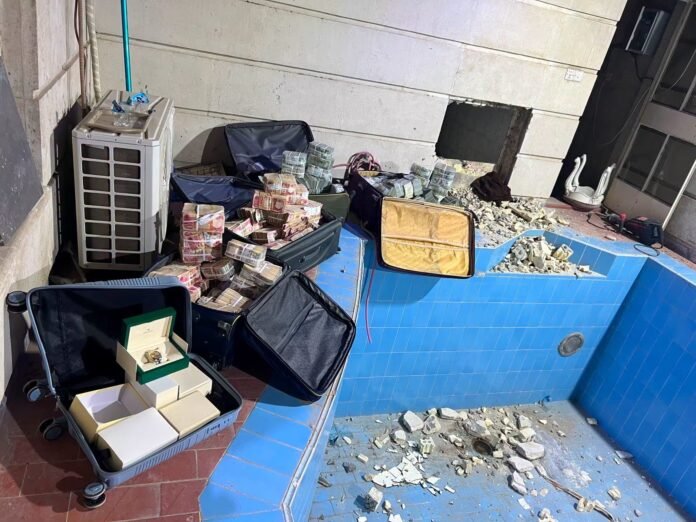
Iraqi authorities have seized millions of dollars in cash from the home of Deputy Oil Minister Ali Maarij al-Bahadly following his arrest as part of a widening anti-corruption campaign.
According to Iraq’s Supreme Judicial Council, investigators recovered $11 million and four billion Iraqi dinars, worth about $3 million, along with several properties after questioning the senior official. The council said investigations remain ongoing.
Al-Bahadly was arrested before dawn on Sunday at his residence in Baghdad’s Zayouna district. Images released by state media showed security forces removing bags of cash concealed inside the walls of the property.
The deputy minister, who has held several senior positions in Iraq’s oil sector since 2003, previously served as head of drilling operations in Maysan before becoming chairman of the Maysan Oil Company. He later entered politics, winning a parliamentary seat in 2014 with the State of Law Coalition and chairing parliament’s oil and energy committee.
He later aligned himself with the Reconstruction and Development coalition led by Prime Minister Mohammed Shia al-Sudani, which supported his appointment to the Oil Ministry.
In May, the United States imposed sanctions on al-Bahadly, accusing him of helping Iran-linked networks smuggle oil by falsifying certificates of origin, blending Iranian crude with Iraqi exports and providing financial support to sanctioned individuals and groups.
A former Oil Ministry official told Asharq Al-Awsat that the allegations reflected broader problems within Iraq’s political and administrative system, arguing that any meaningful anti-corruption drive would need to address networks that have protected senior officials for years.
The arrest forms part of a broader campaign targeting corruption within Iraq’s public institutions. Analysts say the effort has gained public support, although some remain sceptical about whether investigations will extend to the country’s most influential political figures.
The discovery of large sums of cash hidden inside homes has also drawn widespread attention, raising fresh questions over the effectiveness of oversight bodies and the scale of corruption in Iraq.
Separately, the Supreme Judicial Council announced that a criminal court in Diyala sentenced three people to 10 years in prison for embezzling funds intended for families of victims and people injured in terrorist attacks. Prosecutors said the defendants issued hundreds of fraudulent cheques to divert public money.
Meanwhile, former lawmaker Mohammed al-Sayhood, who was detained as part of the same anti-corruption campaign, was released on bail on Tuesday after authorities cited health reasons.
