
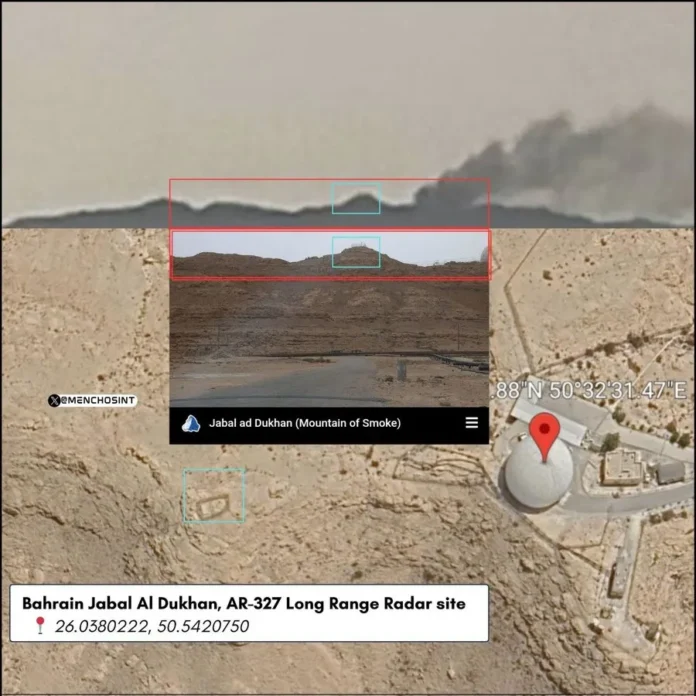
Reports circulating in regional media claim that a radar installation in Bahrain may have been damaged during recent missile exchanges linked to heightened tensions in the Gulf.
According to these accounts, the site—located at a strategic elevated position—was part of a wider early-warning network used to monitor air and maritime activity across the region. However, official confirmation from Bahraini or US authorities has not been provided.
The alleged strike has prompted discussion among military analysts about the resilience of Gulf air defence systems, particularly those integrated into US-led missile shield frameworks involving technologies such as THAAD and Patriot batteries.
The reports suggest that the radar formed part of a broader sensor network designed to track incoming missiles, drones, and aircraft across key shipping routes, including areas near the Strait of Hormuz.
If confirmed, the loss or disruption of such a system could reduce detection range and reaction time for regional air defence operations, potentially affecting coordination across multiple allied platforms.
The incident comes amid ongoing regional tensions involving Iran and Gulf states, where missile and drone capabilities have increasingly featured in security assessments and strategic planning.
Analysts note that modern missile defence systems rely heavily on interconnected radar and data-sharing networks, meaning any disruption to key nodes can have wider operational implications.
Authorities have not publicly confirmed the claims, and details surrounding the incident remain unverified.
