
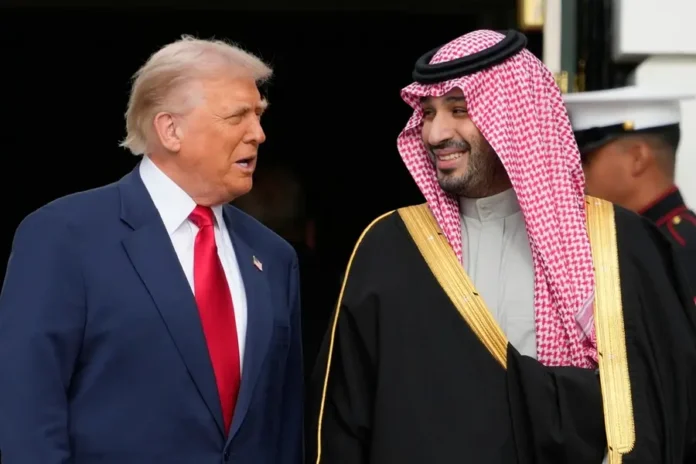
Saudi U.S. Iran diplomatic tension escalated on Wednesday after U.S. President Donald Trump made strong remarks about Saudi Arabia’s leadership. He suggested that Saudi Crown Prince Mohammed bin Salman supports American actions against Iran. The comments added fresh intensity to an already volatile regional situation.
In Saudi Arabia, discussions around regional security continue as the Iran conflict develops. Trump described the Saudi Crown Prince as supportive of U.S. efforts. He also said the Crown Prince actively encourages Washington’s current approach toward Tehran. Saudi U.S. Iran diplomatic tension therefore gained renewed global attention.
Moreover, Trump made the remarks while speaking to reporters at the Oval Office. He responded to questions about Saudi influence on US decisions. He claimed the Saudi leader supports stronger action against Iran. In addition, he described him as a “warrior” aligned with American objectives.
Reports from international media suggested deeper coordination views between Washington and Riyadh. These reports claimed Saudi Arabia sees the conflict as a strategic turning point. They also suggested Saudi leadership views Iran as a long-term regional threat. Saudi U.S. Iran diplomatic tension continues to shape these interpretations.
At the same time, analysts presented different perspectives on the situation. Some experts said Saudi Arabia fears regional instability if the war escalates further. They argued that a weakened Iran could still create unpredictable security risks. Therefore, they believe Saudi policy balances caution and strategic pressure.
Meanwhile, in United States, officials continue to monitor the evolving conflict. Military and diplomatic teams assess risks linked to regional escalation. In addition, policymakers consider the impact on global energy security and maritime routes.
In addition, Trump suggested that Saudi leadership supports continued pressure on Iran. He linked this position to broader regional security concerns. However, other reports indicated that Saudi Arabia publicly supports diplomatic resolution efforts. Saudi US Iran diplomatic tension reflects these conflicting narratives.
In Iran, the conflict continues to influence regional dynamics. Iranian reactions and regional responses shape ongoing developments. As a result, tensions remain high across multiple fronts.
Analysts warn that prolonged conflict could destabilize energy markets. They also highlight risks to shipping routes such as the Strait of Hormuz. Therefore, regional and global stakeholders continue to monitor developments closely.
Finally, Saudi U.S. Iran diplomatic tension remains a central factor in the wider Middle East crisis. Leaders across the region continue balancing diplomacy, security, and strategic interests as the situation evolves.
