
A new wave of attacks has shaken Iraq, increasing concerns over regional stability. The Iraq PMF airstrikes have targeted multiple locations linked to the Popular Mobilization Forces within hours. Notably, one strike focused on a residence connected to a senior PMF commander in Mosul. The Iraq PMF airstrikes highlight a shift toward more precise and high-profile targets.
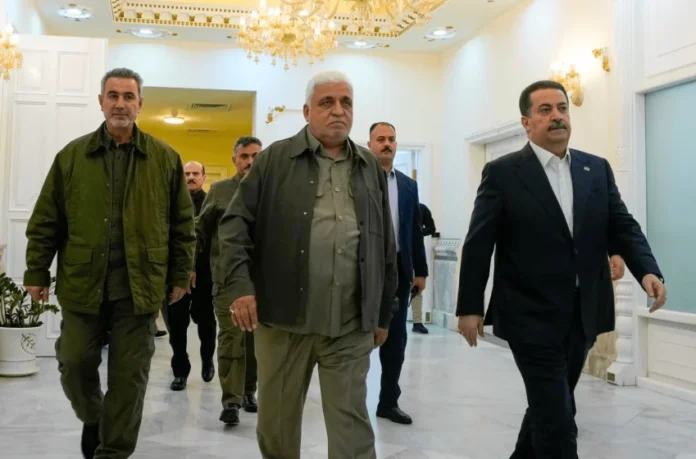
In Mosul, an airstrike hit a home associated with PMF leadership in the city. Security sources confirmed that the strike targeted a location linked to Faleh al-Fayyadh. However, he was not present during the incident. Moreover, officials reported no immediate casualties or major destruction at the site. Still, the attack drew attention due to its focus on a senior figure. Consequently, analysts view the strike as a direct signal aimed at leadership structures.
Meanwhile, another major strike occurred in Anbar province in western Iraq. This attack targeted a PMF facility and caused heavy losses among fighters. Officials confirmed at least 15 deaths and more than 30 injuries. In addition, the strike killed a key operations commander in the province. Therefore, the Anbar incident marked one of the most serious blows to PMF forces in recent weeks.
Furthermore, both attacks unfolded amid rising military tensions across Iraq. Armed factions and foreign forces continue to operate in a volatile environment. Analysts connect these incidents to the broader confrontation involving Iran, United States, and Israel. As a result, Iraq remains a key arena for indirect regional conflict.
The Popular Mobilization Forces continue to play a central role in Iraq’s security landscape. The group includes several factions with strong regional affiliations. Therefore, targeting both leadership-linked locations and operational sites carries major implications. The Iraq PMF airstrikes demonstrate a broader pattern of coordinated pressure on the group.
In addition, authorities have not officially identified who carried out the strikes. However, the timing and scale suggest coordinated military operations. Experts warn that these developments could trigger retaliatory actions in the near future. Consequently, tensions may rise further across multiple regions in Iraq.
Officials continue monitoring the situation while assessing the overall impact of the attacks. They also urged caution as security conditions remain unstable. Ultimately, the Iraq PMF airstrikes underline the growing risks of escalation and the need for urgent de-escalation efforts.
