
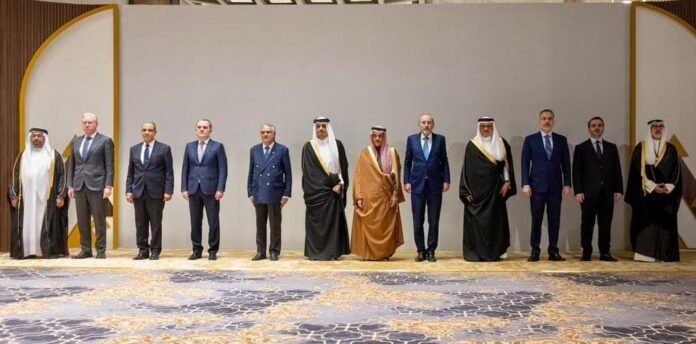
Gulf diplomatic unity statement shaped the outcome of a major ministerial meeting in Riyadh. Regional and Islamic countries gathered to address recent Iranian attacks. The meeting focused on security, stability, and regional coordination.
Moreover, foreign ministers from GCC, Arab, and Islamic countries attended the consultative session. They discussed attacks targeting several regional states. As a result, leaders expressed strong collective concern.
In addition, participants condemned missile and drone strikes on civilian areas. These attacks targeted residential zones and critical infrastructure. Therefore, ministers stressed that such actions violate international norms.
Furthermore, the Gulf diplomatic unity statement rejected any justification for these attacks. Officials declared that states have the right to defend themselves. Consequently, they referenced international law and the United Nations Charter.
At the same time, ministers urged Iran to stop all attacks immediately. They also called for respect toward international law and humanitarian principles. Therefore, they encouraged a shift toward de-escalation.
Moreover, the meeting highlighted the importance of good neighbourly relations. Leaders emphasized that future ties depend on respect for sovereignty. As a result, they demanded an end to interference in internal affairs.
In addition, officials called on Iran to follow relevant UN Security Council resolutions. They urged a halt to support for armed groups in the region. Therefore, they linked regional stability to political accountability.
Furthermore, participants raised concerns about maritime security threats. They warned against actions affecting the Strait of Hormuz and Bab Al Mandeb. Consequently, they stressed the importance of safe international navigation.
At the same time, the Gulf diplomatic unity statement reaffirmed support for Lebanon’s sovereignty. Ministers also rejected external interference in Lebanese internal affairs. Therefore, they emphasized regional independence and stability.
Moreover, the meeting addressed broader regional tensions. Officials condemned escalation in multiple conflict zones. As a result, they called for coordinated diplomatic efforts.
In addition, ministers committed to continued consultation among member states. They agreed to strengthen coordination on security matters. Therefore, they aimed to present unified regional positions.
Furthermore, leaders stressed that regional security requires cooperation. They highlighted the importance of collective responses to threats. Consequently, they reinforced long-term strategic unity.
The Gulf diplomatic unity statement reflected strong regional alignment. Ministers agreed on shared concerns and coordinated responses. Gulf diplomatic unity statement now represents a key message of solidarity across the region.
