
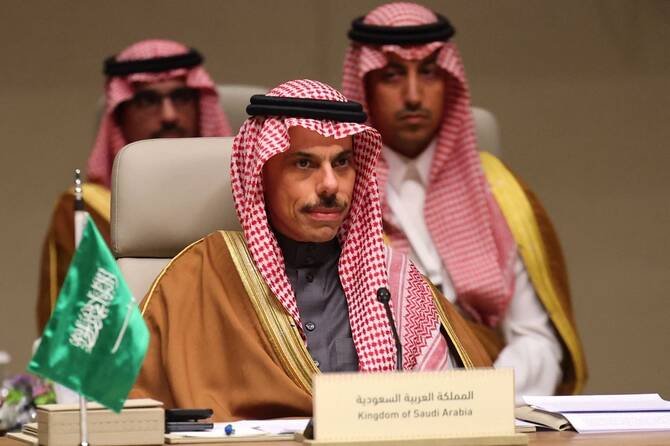
Saudi Iran escalation warning grows stronger as Saudi Arabia signals that its patience with ongoing attacks has limits. The Foreign Minister delivered firm remarks after an emergency regional meeting in Riyadh. The statement reflects rising tensions across the Gulf.
Moreover, the minister warned that restraint will not last indefinitely. He stressed that Saudi Arabia holds strong defensive and military capabilities. As a result, he suggested that responses could shift if attacks continue.
In addition, officials stated that the Kingdom may consider military action if necessary. This marks one of the strongest warnings since the conflict began. Therefore, regional tensions reached a new level of seriousness.
Furthermore, the Saudi Iran escalation warning follows repeated missile and drone attacks across Gulf states. Iran has launched multiple strikes targeting Saudi Arabia and neighboring countries. Consequently, air defense systems remain on high alert.
At the same time, Saudi defense forces intercepted several ballistic missiles targeting Riyadh. Debris fell near residential and industrial areas. As a result, emergency teams responded quickly to secure affected locations.
Moreover, authorities confirmed that multiple drones and missiles were intercepted across the Kingdom. Defense systems successfully stopped hundreds of aerial threats. Therefore, security operations intensified nationwide.
In addition, the Foreign Minister accused Iran of carrying out pre-planned attacks. He stated that the actions appear coordinated and deliberate. As a result, trust between the two sides continues to decline.
Furthermore, the Saudi Iran escalation warning highlighted damage to regional diplomatic relations. Officials said recent cooperation efforts with Tehran have collapsed. Therefore, diplomatic channels face increasing strain.
At the same time, Gulf countries including the UAE, Qatar, and Kuwait reported similar attacks. These incidents suggest a wider regional escalation. Consequently, coordination among Gulf defense systems has increased.
Moreover, Saudi officials reported that energy facilities also came under threat. Refineries and industrial sites faced attempted strikes. Therefore, protection of infrastructure remains a top priority.
In addition, the minister reaffirmed that Saudi Arabia still prefers diplomatic solutions. However, he warned that continued escalation could close that path. As a result, future negotiations remain uncertain.
Furthermore, regional conflict has already caused significant displacement and casualties in nearby countries. The humanitarian impact continues to grow. Therefore, international concern over escalation is increasing.
Saudi Iran escalation warning signals a critical point in regional tensions. Authorities continue balancing diplomacy and defense readiness. Saudi Iran escalation warning therefore remains central to Gulf security developments.
